Extreme weather devastates Moldova's honey production
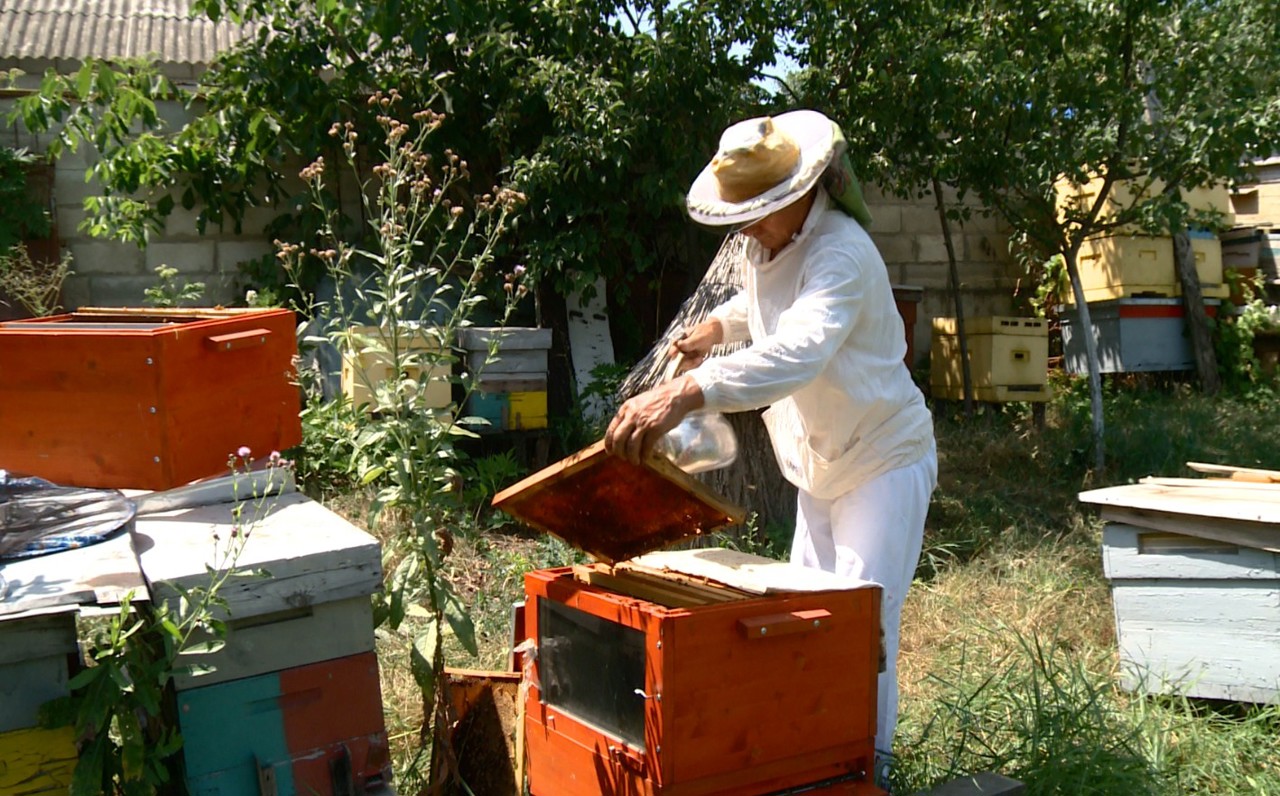
Beekeepers are raising the alarm. The beekeeping sector is facing one of its most challenging periods in recent decades.
Drought and extreme weather conditions have severely affected honey production. While some beekeepers report they've started losing entire bee colonies, others are forced to artificially feed them just to keep them alive.
"In previous years, you'd hear the buzzing of bees here. Now, silence reigns in the hives. Spring frosts and rains left the bees without food, and sunflowers, their last significant nectar source, also represent the last hope for beekeepers," reports Alexandr Statnîi, a journalist for Moldova 1.
Vladimir Miron owns several apiaries in Nisporeni and Colonița village, a suburb of the capital city. The beekeeper says that in previous years, he used to harvest up to 50 kilograms of honey from one apiary.
"This year, at the Nisporeni apiary, I didn't harvest a single kilogram of honey. The sunflower period is coming – I think we'll get around 10 kilograms. Here, I harvested a maximum of 10 kilograms of rapeseed and sage honey," Vladimir Miron stated.
He anticipates a difficult winter for the bees, with significant losses.
"If we open the inner cover here, it should be full of bees and honey. It's practically empty. The problem isn't the lack of honey, but the absence of bees. Honey can be produced next year, but without bees, we have no chance of successful overwintering," he explains.
Beekeepers state that most of the honey collected will remain in the hives to ensure the overwintering of their bee colonies.
"If in past years we had a yield of over 20 kilograms per colony from sunflowers, now we're seeing a yield of five, seven, or eight kilograms per colony," says Ion Maxim, Executive Director of the National Association of Beekeepers of the Republic of Moldova (ANARM).
Another major issue is the low reproduction rate of bees. In this context, beekeepers are forced to intervene with larger quantities of supplementary feed to maintain their colonies.
"To build up this food reserve, we need to provide each bee colony with at least 15 kilograms of sugar or inverted syrup, and the costs are high," explains Andrei Zagareanu, President of ANARM.
Authorities have been informed about the difficulties in the sector. The Ministry of Agriculture and Food Industry announced that next week, it will organize a meeting of the Consultative Council on Apiculture, where current challenges and necessary measures to support the field will be discussed.
Translation by Iurie Tataru