“Moldova without Violence”: Authorities unveil new anti-abuse strategy
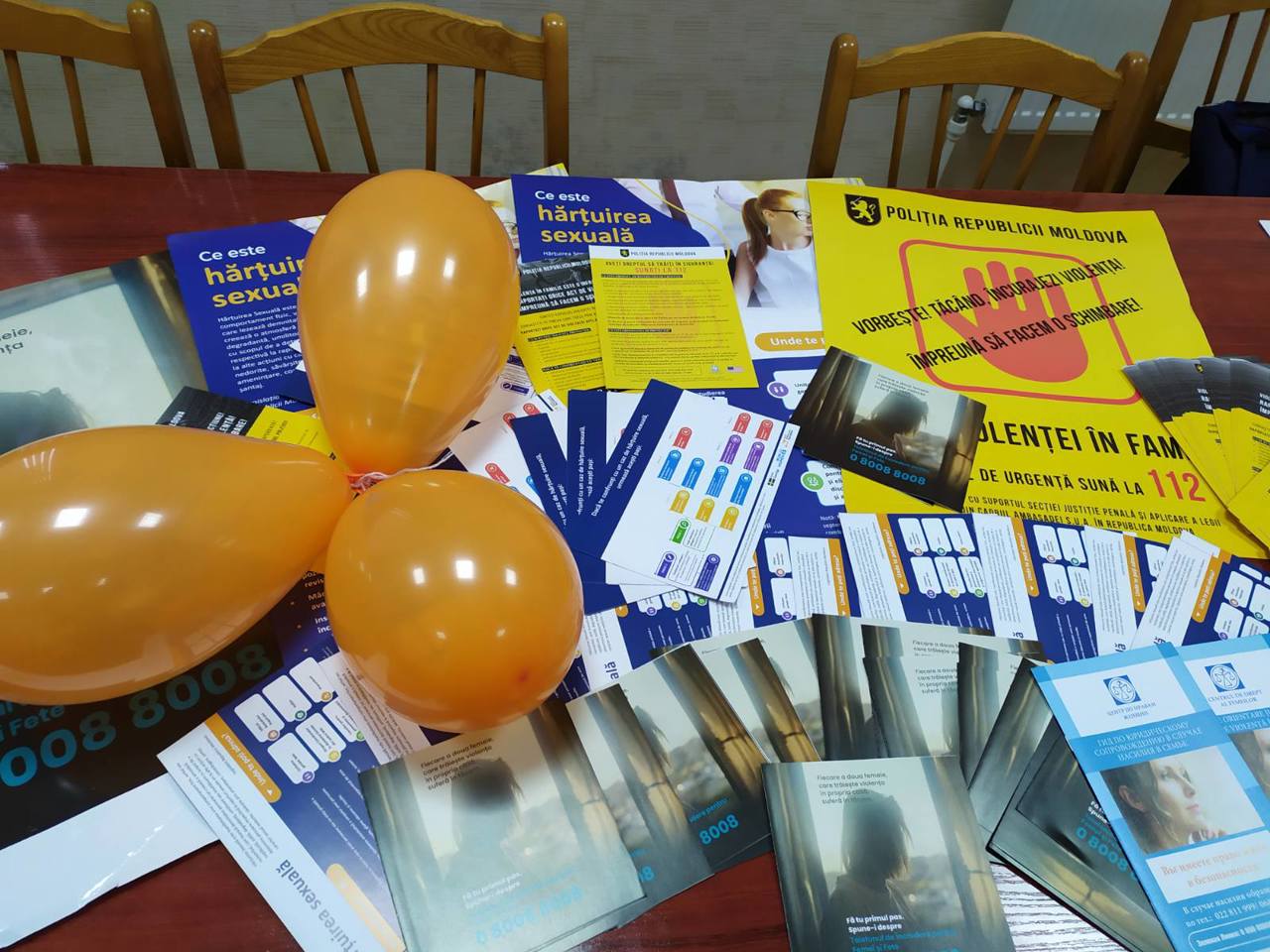
The Republic of Moldova is launching the "16 Days of Activism against Gender-Based Violence" campaign with the message "Moldova without Violence." The authorities are announcing significant changes to prevent and combat this issue.
Despite a reported increase in incidents of violence, experts suggest that this may not necessarily indicate a rise in the problem itself, but rather an increased awareness among the public. However, systemic issues continue to discourage victims from reporting abuse.
On November 25, five ministers delivered public messages in Cathedral Square, with other government representatives expected to join similar events across the region to launch the national campaign "16 Days of Activism against Gender Violence." At 5:00 p.m., government buildings, including Parliament and the Arc de Triomphe, will be illuminated in orange to draw attention to this issue.
Rodica Moraru-Chilimar, the deputy head of the Gender Equality Policy Directorate within the Ministry of Labor and Social Protection (MMPS), stated, "Violence must not be tolerated, and there is life outside of violence." However, she emphasized that many cases remain unresolved, fostering distrust among victims towards state institutions.
Moraru-Chilimar expressed concern, saying, "Women are left with the impression that the state and authorities have not intervened, which discourages them from coming forward."
The police recorded approximately 15,000 reports of violence in the first ten months of the year, reflecting a 5-10% increase compared to the previous year. Senior officer Ghenadie Neamțu noted that this increase does not necessarily indicate a rise in violence, but that the statistics require careful analysis. In contrast, gender studies researcher Loretta Handrabura partially disagrees with this interpretation.
"The number of calls indicates that this phenomenon should not be tolerated and should be reported. This does not imply that the situation has improved. In fact, the issue is on the rise, even with mechanisms and sanctions in place that neither the aggressors nor the victims are aware of," she highlighted.
Policies localized at the community level starting in 2026
The authorities have announced that prevention will be the top priority.
“We must focus on prevention. We know how to do it and have looked at successful approaches in other countries. It starts at the local level, with each person and the local public administration,” said Viorica Țîmbalari, head of the National Agency for the Prevention and Combating of Violence, during a recent broadcast.
Beginning in 2026, national policies will be implemented at the community level, marking a first for the Republic of Moldova.
A significant challenge remains the early identification of cases, which “leaves much to be desired,” according to Moraru-Chilimar.
The most common form of violence is psychological violence, which often accompanies other types of abuse. An increasingly urgent issue is digital violence. “We need to protect women both online and offline. Until now, we have not had regulations addressing this type of violence. With the emergence of social networks, this phenomenon has become more complex. It will be a challenge for the Republic of Moldova as well,” emphasized Țîmbalari during an interview on public radio.
Starting February 2026, aggressors may be mandated to remove derogatory content and prohibited from contacting victims online. Judges, prosecutors, and law enforcement officers will receive training to implement these new regulations.
As part of the reforms, the Ministry of Labor and Social Protection (MMPS) will have a specialist in each district focused on domestic violence and the rehabilitation of crime victims—totaling 33 specialists nationwide, along with 10 coordinators from the Territorial Agency for Social Assistance.
Similar structures are also active in Chișinău and the Gagauzia Autonomous Region. Since 2024, community social workers have reported cases weekly. In 2024, approximately 4,670 cases were assisted, but that number has now increased to 8,000, reflecting both more frequent reporting and the complexity of the issues at hand. Currently, 11 state-funded specialized services operate in the Republic of Moldova, with plans for expansion next year.