Europe security fears grow over US peace plan concessions to Vladimir Putin
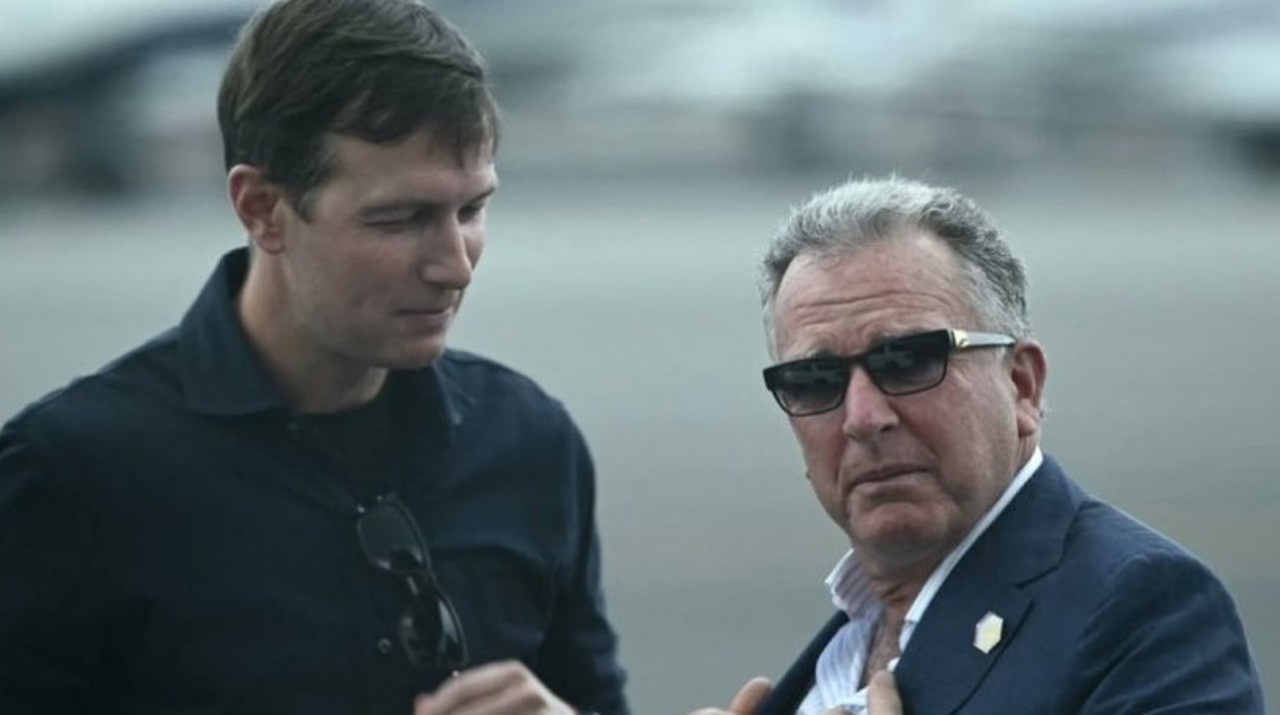
President Donald Trump’s Senior Advisor, Steve Witkoff, and his son-in-law, Jared Kushner, are scheduled to meet with Russian leader Vladimir Putin in Moscow on Tuesday for US-Russia peace talks focused on ending Europe’s bloodiest conflict since World War II.
However, regardless of the outcome of President Trump’s latest initiative to bring the Ukraine war to an end, European capitals fear the prospect of a deal that fails to punish or weaken Russia, thereby undermining the continent's security, Reuters reports. These European security fears are driving opposition to the preliminary terms.
President Trump has consistently reiterated his commitment to ending the war in Ukraine, describing the conflict as a 'bloodbath' that must end. While the administration has hosted high-level engagements, including a summit with Putin in Alaska in August, these efforts have yet to conclude with a comprehensive peace agreement or ceasefire. The administration continues to promote diplomatic proposals aimed at accelerating negotiations, but concrete progress remains limited.
The 28-Point American Plan and European Reaction
The recent 28-point American peace plan has triggered alarm in Kyiv and across European capitals. Ukrainian and European officials argue that some provisions amount to significant concessions to Moscow's demands. These include renouncing Ukraine's prospects for NATO membership, formally recognizing Russian territorial control over parts of Ukrainian territory, and imposing substantial restrictions on Ukraine’s military capability. These elements are widely perceived as directly endangering Ukraine's sovereignty and long-term security.
European Counter-Proposal and Geneva Discussions
In response, major European powers have formulated a counter-proposal to safeguard Ukraine's position.
At the Geneva negotiations, the US and Ukraine announced they had agreed on an "updated and elaborated peace framework," intended to serve as the basis for subsequent discussions. Officials stressed that the documents presented are merely proposals, not a final draft agreement, and that core elements of any final understanding remain under active negotiation.
Russia’s Stance
Vladimir Putin has characterized the ongoing discussions as a collection of proposals that "could form the basis for future agreements," but emphasized they are not yet contractual text. Russia maintains a willingness to talk but issued a stern warning: if Ukraine rejects a final deal, Russian forces will continue the offensive and expand territorial control.
Military Situation and Human Cost
Russian forces currently control more than 19% of Ukraine's territory, spanning approximately 115,600 square kilometers, and have accelerated their advances in 2025. Russian commanders have recently reported the capture of the frontline cities of Pokrovsk and Vovchansk.
US officials estimate that over 1.2 million personnel have been killed or wounded in the conflict, although neither Ukraine nor Russia releases detailed, official casualty figures. This battlefield momentum intensifies pressure on negotiations, as ground gained by military action directly strengthens negotiating leverage.
Economic and Political Stakes for Europe
Since the emergence of the preliminary American proposals, European leaders have mobilized to prevent an agreement viewed as unduly favorable to Russia. Their concern is that such a deal could facilitate Western investment into Russian strategic sectors and support Moscow's readmission into key international forums.
Russia’s key demands include binding guarantees against Ukraine joining NATO, formal recognition of its control over Crimea, Donbas, and other occupied regions, and severe limitations on Ukrainian armed forces. Kyiv views these conditions as tantamount to a full surrender.
Europe fears an "unpleasant" agreement would fundamentally weaken continental security and legitimize Russia's return to the Western economy, thus supplying it with the resources needed to rebuild its military capabilities.
European officials have attempted to exert influence through proposed security guarantees and initiatives, such as a possible "assurance force" led by France and the United Kingdom. However, Russia has rejected these measures, limiting Europe's ability to dictate terms.
Reuters notes that public statements by US officials—including Secretary of State Marco Rubio’s promise of greater European involvement—have failed to fully alleviate the concerns of European capitals, which remain wary of transatlantic commitment and the risk of a long-term Russian strategic win.
Translatino by Iurie Tataru