Dairy farms in southern Moldova saved after forming a cluster
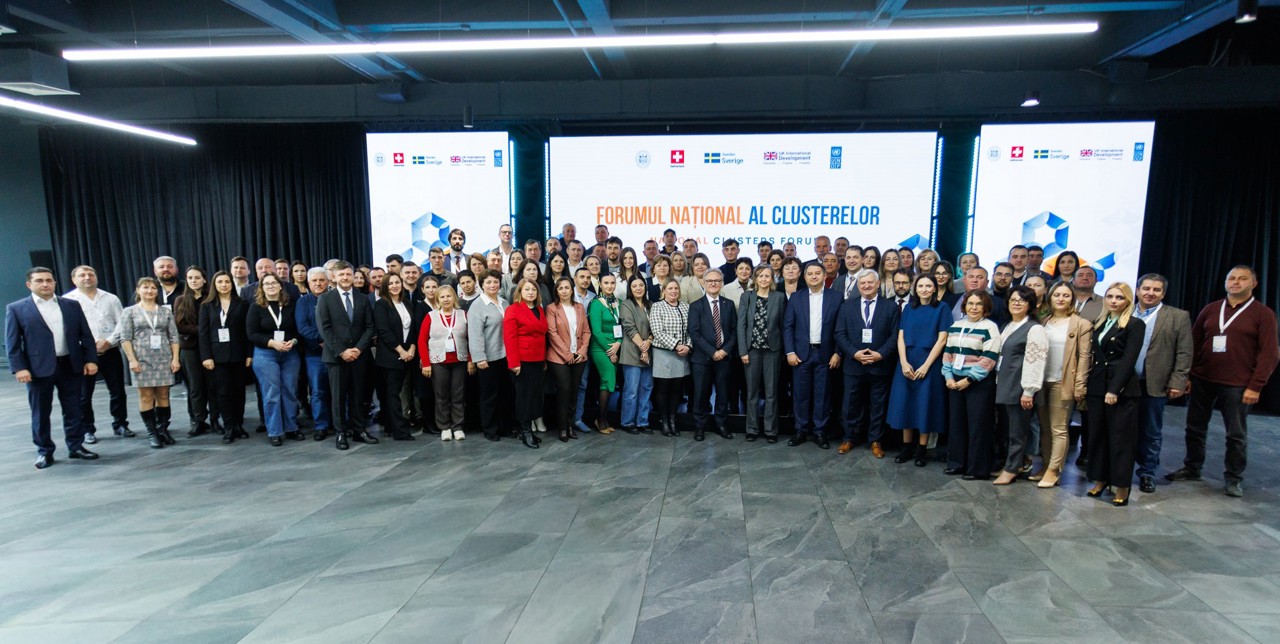
Businesses in the Republic of Moldova can attract more investment and create new jobs by establishing economic clusters modeled after successful European examples. To date, 20 clusters have been formed in the Republic of Moldova, with several more currently in development.
Dairy farms in southern Moldova thrive through collaborative efforts
Dorina Baciu, an entrepreneur from the Cimișlia district and owner of a sheep and goat farm and cheese producer, stated at the first National Forum dedicated to clusters held this week in Chișinău that their association has led to the modernization of over half of the farms in the area and has opened access to new markets.
"In our country, the sales market is very small, so we formed this cluster to collaborate like they do in Europe. Each member focuses on their own work—animal breeding, milk production, or processing—making us collectively stronger. We believe that such collaborations in protected geographical areas, similar to those in Europe, will help recognize our products," Baciu told Radio Moldova.
Andrei Darie, Program Coordinator for UNDP Moldova, highlighted the isolation of entrepreneurs as a major obstacle to development, noting that the tourism sector could become a fast track to success.
"We need to evolve. Regarding the culture of association, we should not remain isolated but join forces for a common goal. Since 2020, we have supported the creation of 17 clusters across various fields, particularly in agriculture, with emerging areas such as tourism. Interestingly, tourism could serve as a model for economic cooperation alongside industries such as furniture and textiles," Darie emphasized.
Romanian model: 77 clusters and a 131% increase in investments
Participants at the forum stressed the need to establish a national cluster platform, drawing inspiration from the Romanian model. Daniel Coșniță, President of the Romanian Cluster Association, presented successful statistics during the event in Chișinău, noting that four clusters from Moldova are already members of the Romanian association.
"Currently, the Ministry of Economy, Entrepreneurship and Tourism in Bucharest oversees 77 cluster initiatives, with 55 members in the Romanian Cluster Association, including four from the Republic of Moldova. These clusters span diverse fields, including traditional sectors like the wood and furniture industry, textile industry, agrifood and bioeconomy, renewable energy, IT, and machine construction," Coșniță stated.
He further explained that in Romania, clusters have emerged from a genuine need within companies and have become strategic partners for the government.
"Clusters in Romania have developed in response to businesses' needs for such associations. These entities are robust; where national policy may be lacking, they advocate for their members' interests with regional and national authorities to secure funding and partnerships. Additionally, there has been a longstanding collaboration between the Romanian Cluster Association and the Ministry of Economy, leading to the development of public policies and the organization of major events related to various European projects, especially within the Danube Cooperation Program," he added.
Nine clusters from the Republic of Moldova certified at the European level
While the Republic of Moldova currently lacks a national strategy dedicated to clusters, their significance is recognized in the National Industrial Development Program for the period of 2024 - 2028. As a result, forum participants agreed that a critical step forward is the adoption of public policy that would position clusters as key pillars of sustainable economic growth.
So far, nine clusters from the Republic of Moldova have received the European ECEI Bronze Label certification for "Striving for Cluster Excellence," acknowledging their operational performance and alignment with EU standards.
Since 2019, the UNDP and its European partners have invested $4.8 million to establish and enhance clusters in several sectors, including animal husbandry, horticulture, tourism, and light industry.
These 20 clusters have generated over 300 new jobs, introduced more than 50 new products and services, optimized 10 technological and digital processes, and formed 10 partnerships within the European Union.