Expert | In Russia-US negotiations, Moldova risks being marginalized on the Transnistrian issue
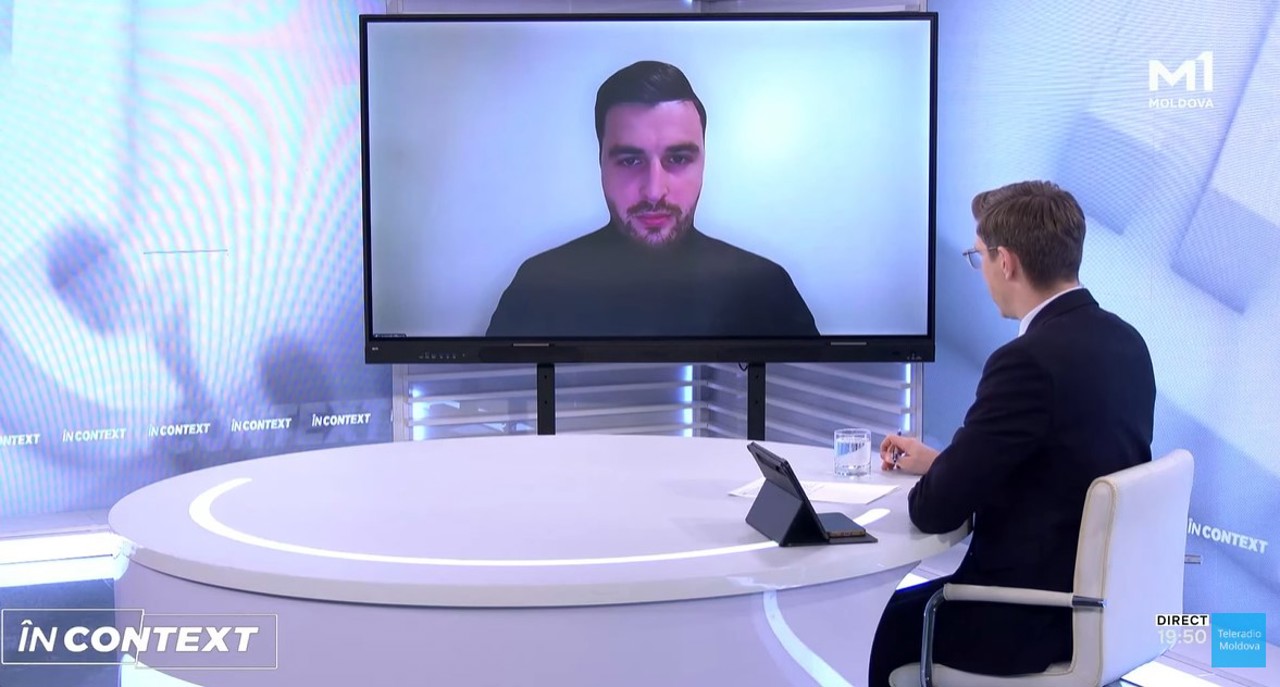
In discussions regarding the peace plan for Ukraine, the interests of smaller states may be overlooked amidst the maneuvering of major powers. As a result, Chișinău risks jeopardizing its strategic position concerning the Transnistrian issue. Political analyst Laurențiu Pleșca emphasized on the show "IN CONTEXT" on Moldova 1 TV that the Republic of Moldova must stay vigilant and engage in active diplomacy during negotiations about the future of European security.
"The complete and unconditional withdrawal of Russian troops from the Transnistrian region is a critical issue that should be addressed, but not necessarily within the framework of bilateral negotiations. In discussions between the United States and Russia, we often observe that Ukraine is not included. This indicates that when major powers discuss certain security matters, smaller states like the Republic of Moldova may not have a voice. It is essential to keep the Transnistrian issue in the spotlight of the European Union," stated Laurențiu Pleșca during an interview on Moldova 1.
The expert also cautioned that the Republic of Moldova risks losing control over its interests if major powers decide to bundle the Transnistrian issue into a broader negotiation package.
"If the Transnistrian issue were to be included in a larger framework focusing on Ukraine and Russia, there is a strong possibility that the Republic of Moldova could lose control over its own interests, and these outcomes could be negotiated without Chisinau's input. The authorities in Chisinau need to invest more effort into the 1+1 format. The 5+2 format has proven unproductive for three decades, especially given that the parties involved are now at war. I'm not referring to the OSCE, which has failed to maintain peace in Europe," the analyst said.
Pleșca also connected Marco Rubio's absence from the recent NATO ministerial meeting to an administrative transition that may signal a strategic shift.
"The new NATO budgets are currently under discussion, including priority funds for Ukraine, as there are more than four billion dollars in commitments aimed at providing military assistance to Ukraine. Since the Trump administration took office, I have not observed any additional military support allocations to Kyiv. All the recent deliveries were commitments made by the U.S. government during President Biden’s term. Meanwhile, Europe has begun to ramp up its production, but these deliveries take time, and European states need to enhance their support for Ukraine," the expert explained.
"The absence of U.S. Secretary of State Marco Rubio could indicate an increased focus on peace negotiations with the Russian Federation. We have seen the special envoy, Witkoff, present in Moscow. However, a consensus was not necessarily reached, although some discussions were productive. There is speculation about President Trump’s inner circle; we notice the traditional Republican faction, of which Marco Rubio is a part, as well as others who represent a more radical stance. Rubio tends to adopt a more conciliatory approach towards Ukraine," Pleșca pointed out.
Emphasizing the firmness of the European response to Russian threats, Pleșca also warned against hybrid tactics at a crucial moment in the negotiations.
"NATO member states are not intimidated by the Russian president's rhetoric. We have seen the Russian Federation propose a 28-point plan that is utterly unacceptable to both Ukraine and European states. That is why, a European counterproposal was prepared by Great Britain, France, Germany, and, of course, Ukraine, aiming to demonstrate a strong position from European states. Currently, as negotiations are taking place, the Russian Federation is deploying its entire hybrid arsenal against NATO member states, including neighboring countries like the Republic of Moldova", the expert from Bucharest concluded in the show on public television.