IPRE Director: "Moldova's accession to the EU is not a technical process, but one of transformation and opportunities"

The Republic of Moldova is gearing up for the 11th edition of the European Integration Forum, an event crucial to the country's journey toward European integration. The theme of the forum is wide-ranging, with high expectations, covering topics from the negotiation of accession chapters to the alignment of society and the business environment with EU standards. Experts describe joining the European Union (EU) as "an existential choice" for the Republic of Moldova.
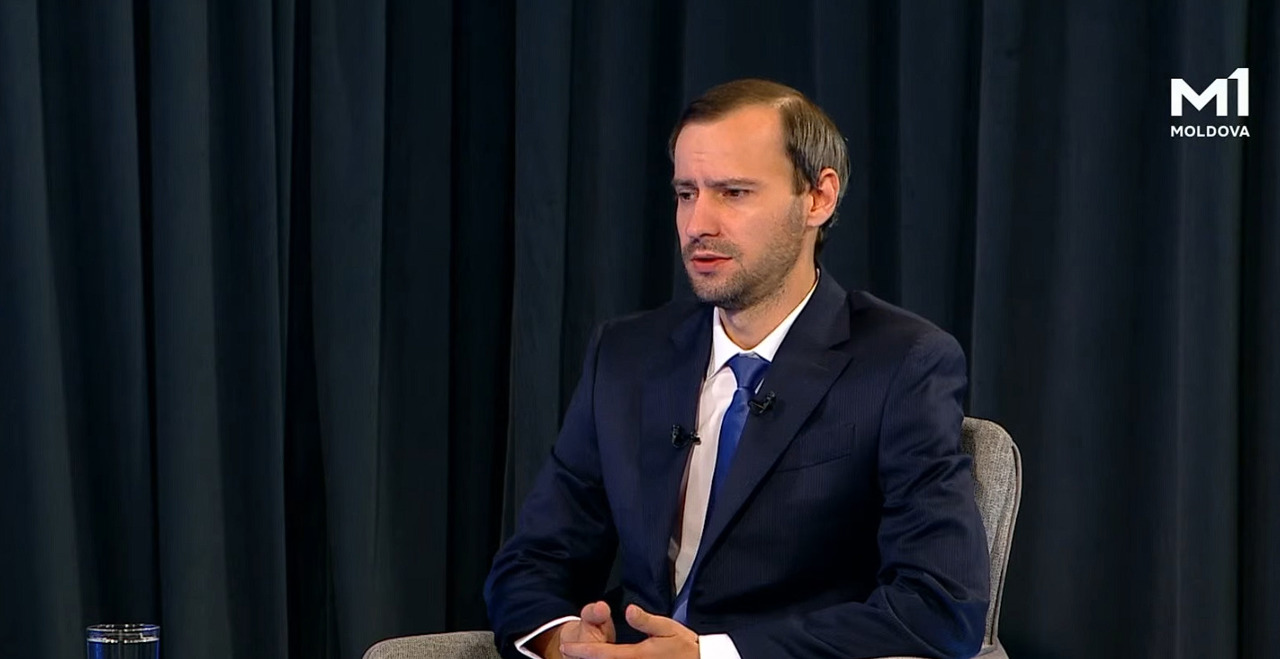
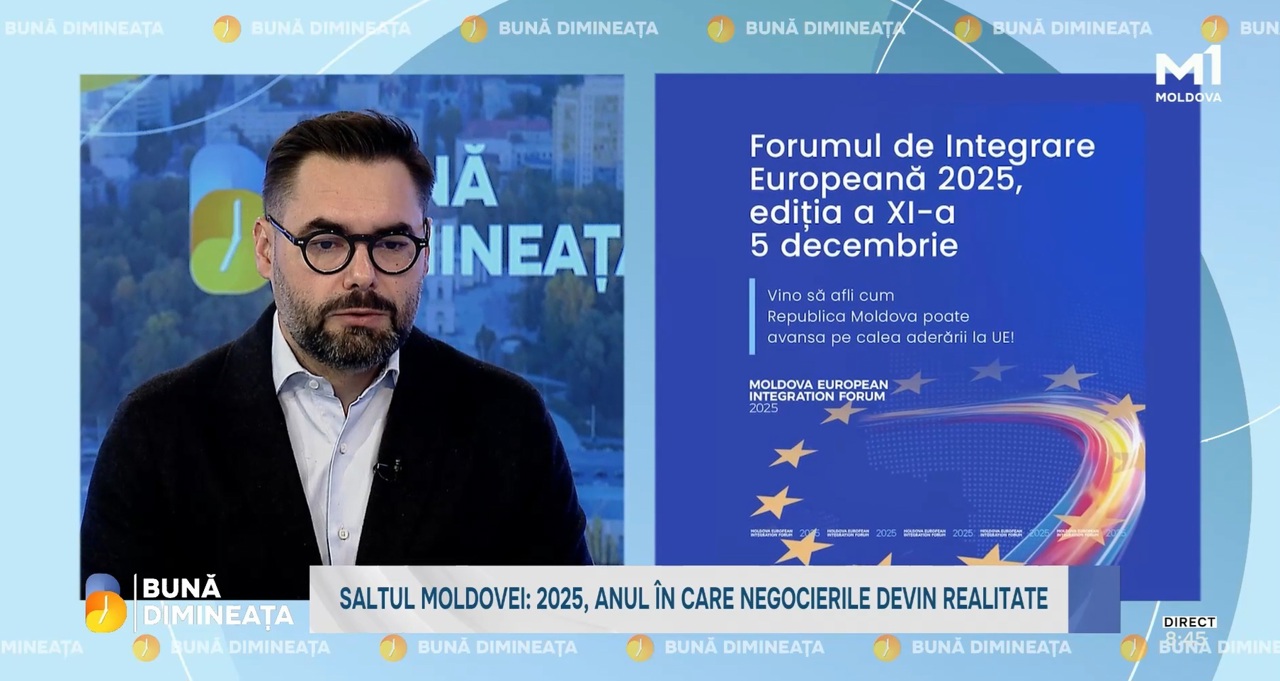
Iulian Groza, the director of the Institute for European Policies and Reforms (IPRE), stated on the show "Bună Dimineața" on Moldova 1 that this year's edition will focus on three central themes: the Republic of Moldova's position in negotiations, how to capitalize on European support, and the need for genuine political cohesion.
"We want to assess the current path, understand the challenges, and prepare for the next stages. Our goal is to analyze how the Republic of Moldova can effectively utilize the support provided by the European Union through the Economic Growth Plan. Additionally, we aim to evaluate how we can contribute to political cohesion and ensure that the accession objective aligns with the positions of political parties and society," Groza explained.
The forum will include officials from Chișinău, representatives of the European Parliament, local and national political leaders, and business people.
"We will have a message from Mr. Negrescu, the Vice President of the European Parliament. Representatives from all parties in Parliament will also be present, along with the mayor of Comrat, who will share insights from a local perspective," Groza added.
Business environment: A key player in accession
When asked if the forum would conclude with resolutions or clear priorities, Groza explained that the primary purpose of this debate platform is not to adopt documents but to facilitate discussion.
Regarding the ambitious goal of signing the accession treaty by 2028, Groza emphasized that the most important task is to consolidate the progress that has been made.
"We have achieved many things. We are at an advanced stage, and the European Commission's assessments are positive. The Republic of Moldova has distinguished itself among all candidate countries for the progress it has made. We need to improve our communication, to inform citizens more effectively. It's never enough when it comes to keeping citizens informed. I hope this forum provides that opportunity,” Groza noted.
Joining the European Union means "the accession of everyone living in the Republic of Moldova," and the business community plays a "critical" and "essential" role, Groza stated.
He further commented that the involvement of the business community in elections and social mobilization has been both visible and necessary. “They recognized how important it is to unite, to convey the same message, and to work toward a common goal. Accession is not merely a technical process; it is a journey of transformation and opportunities,” Groza added during an interview on public television.
"Accession is an existential choice"
The Director of the Institute for European Policies and Reforms (IPRE) emphasized that people's attitudes toward the EU are evolving positively.
"When we discuss the European Union, we are not merely talking about ideals. Moldova's accession to the EU represents an existential choice for us. The Republic of Moldova has no alternatives. As a small country with limited resources, we heavily rely on EU support. Therefore, effective communication is vital. We need to explain our goals more clearly and persistently. We must act in unity, as this is the only way we can succeed," Groza stated.
When asked whether the Republic of Moldova feels pressure to maintain its status as a "model country" during the accession process, Groza responded that this pressure is healthy.
"Choosing the European direction is a natural decision for us. Negotiations are complex, and everyone’s efforts count. The Parliament, the Government, the business sector, young people, and local authorities all have roles to play. This pressure motivates us and helps us understand our priorities," the expert explained.
Groza also highlighted specific benefits of European integration already experienced by citizens: "In just one month, citizens saved over 1.4 million euros by eliminating high bank fees. Regarding energy, the EU is helping us become more independent. We no longer have to worry about whether we will have gas or electricity at the end of the year."
The IPRE director believes that the Republic of Moldova must create the right conditions to join the European Union when the time comes, "where we can all experience greater security and more opportunities."
The 11th edition of the European Integration Forum, scheduled for December 5 in Chișinău, will bring together experts, decision-makers, and representatives from civil society to analyze the reforms and progress of the Republic of Moldova in the EU accession process. The event will focus on advancements and challenges in the reform agenda, priorities for opening negotiation chapters, and recommendations outlined in the 2025 Enlargement Report.
Another significant topic for discussion will be economic convergence, including how the country can effectively leverage the EU's 1.9 billion Euro Growth Plan with an emphasis on transparency, impact, and sustainability.
The forum will also address the political and social aspects of European integration, exploring dialogue between political parties, reducing polarization, and involving citizens in decision-making processes.
The event is organized by the Friedrich Ebert Stiftung Moldova, the Institute for European Policies and Reforms, the Foreign Policy Association, in partnership with the Office for European Integration and the Soros Foundation Moldova.