From vulnerability to maturity: How Moldova secured its energy future in 2025
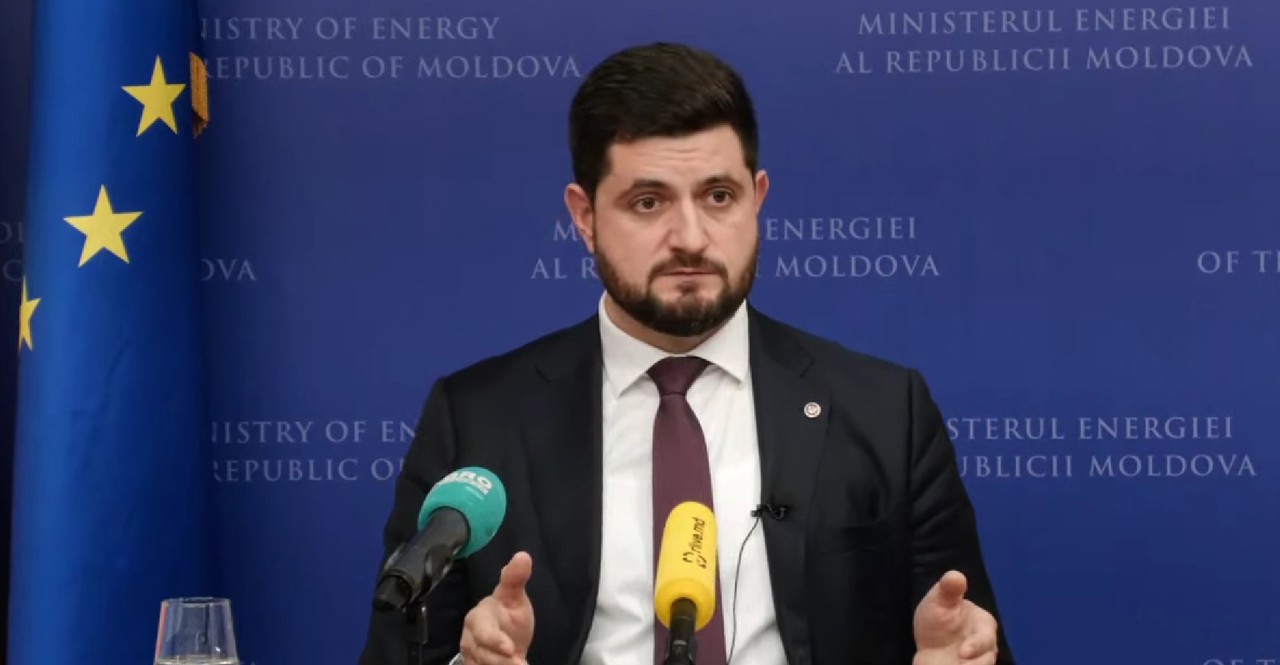
The Republic of Moldova concludes 2025 "more energy-secure, better connected to Europe, and ready for the future," stated Energy Minister Dorin Junghietu.
After years of fragility and vulnerability to political blackmail, the state has reached a stage of maturity with the tools to react instantly to crises.
The authorities moved from legislative frameworks to concrete infrastructure projects and renewable energy implementation. This progress occurs amidst a regional context marked by the war in Ukraine and persistent threats to energy networks.
"A few years ago, Moldova depended almost entirely on a single source, a single supplier, and a single corridor," Junghietu said during a press conference on December 22. "Today, we can responsibly state that this period is over. Our market is open, connected to Europe, and secure."
Eliminating dependence on the Russian Federation
A strategic objective achieved in 2025 was the total elimination of energy reliance on Russia. Since January 1, the right bank of the Dniester no longer purchases electricity from the MGRES plant in Transnistria.
Consumption is now covered by a balanced mix of domestic production and imports from Romania and Ukraine. This is managed through approximately 12 different sources, including bilateral contracts and stock exchange acquisitions.
Minister Junghietu reiterated that Transnistrian electricity has become unprofitable due to high gas costs. The MGRES plant currently consumes three cubic meters of gas to produce a single megawatt of electricity.
Romania as the cornerstone of security
In December 2025, Moldova reached a historic milestone as the national energy operator launched its first day-ahead and intraday market transactions. This aligns the country fully with European market rules.
Romania remains the primary pillar of Moldova’s energy security. The two systems are now interconnected and functional even during emergency situations caused by external shocks.
"During the winter of 2025, amid Russian strikes on Ukrainian infrastructure, we activated emergency mechanisms," Junghietu noted. "We maintained national stability without a single blackout, utilizing all four 110 kV cross-border lines with Romania."
Natural gas diversification and Energocom’s role
In the gas sector, Romania serves as the lead partner. Through the state-owned company Energocom, gas is purchased from European hubs, ensuring price predictability. The Iasi-Ungheni-Chisinau pipeline is now operating at maximum capacity.
Furthermore, Moldova’s integration into the Vertical Gas Corridor provides access to alternative sources from the Caspian Sea, as well as LNG from Greece and the United States.
A crucial step was Energocom assuming the supply role for 830,000 consumers. This move protects citizens from market volatility while the state prepares for full liberalization by April 2026.
Strategic infrastructure and green transition
The Vulcanesti-Chisinau transmission line is nearing completion, which will directly link Moldova to the European ENTSO-E grid. Parallel projects like Balti-Suceava are also advancing to increase cross-border capacity.
The green transition accelerated sharply in 2025. Moldova is approaching 1,000 MW of installed renewable capacity. In April, renewables covered 36% of national consumption, reaching 100% during certain intervals.
Recent competitive auctions for 170 MW of wind power were capped at approximately €0.07 (1.44 MDL) per kWh. These projects are vital for reaching the national goal of 30% renewable energy by 2030.
Energy efficiency and lower bills
Investments in efficiency are now directly reducing consumer costs. A major project supported by the EBRD installed 2,510 individual thermal points, reducing heat loss in blocks by up to 30%.
Through the "Green House" program and the Residential Energy Efficiency Fund, over 500,000 square meters of living space are being renovated. Results show energy consumption drops of over 50% in modernized buildings.
Total investments in residential rehabilitation are estimated at €82.5 million (approx. 1.6 billion MDL). This effort is bolstered by the EU-funded EcoVoucher program and the rollout of smart metering.
Digitalization and European recognition
The sector has also advanced in cybersecurity and digitalization. A pilot project aims to install 100,000 smart meters by 2027, covering 7% of the nation’s consumers to improve grid management.
Minister Junghietu concluded that Moldova remains a leader within the European Energy Community for implementing EU legislation. This progress is a critical component of the country’s path toward European Union accession.
Translation by Iurie Tataru