Moldova moves to restructure schools and reintroduce grades as education reform divides experts
Moldova's parliament voted on February 12 to advance significant amendments to the country's Education Code, covering the restructuring of small schools, the reintroduction of formal grades in Grade 4, expanded financial autonomy for larger schools, and enhanced support for children with disabilities and diaspora families. The bill passed its first reading and comprises 18 separate changes to the national education system.
Of the 73 schools scheduled for reorganisation in 2026, 63 will continue operating in their communities under a new legal structure, while 10 will close outright. Families whose children must travel to a school in another locality will receive a monthly allowance of 1,000 Moldovan lei (approx. €51) for two years.
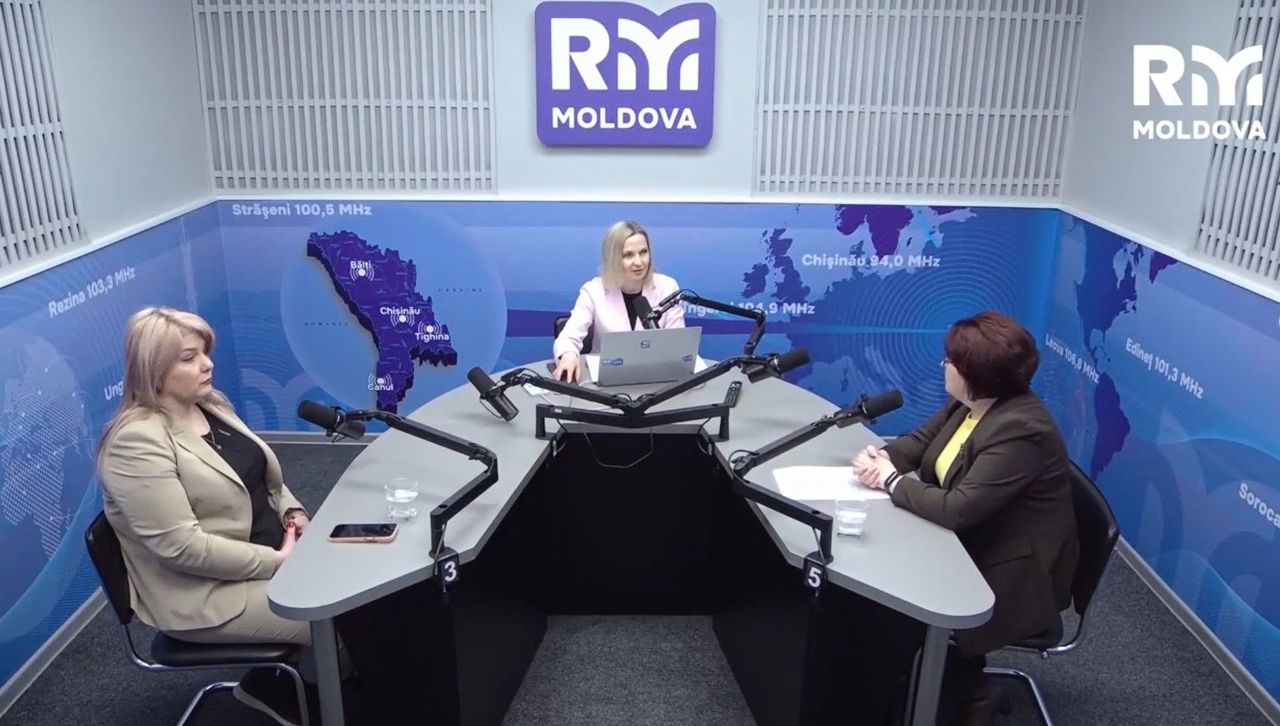
Viorica Goraș-Postică, deputy director of the ProDidactica Educational Centre, acknowledged that the restructuring rests on sound arguments, while cautioning that some amendments require more rigorous analysis grounded in comparative research and broader consultation with universities and civil society organisations. She told Radio Moldova's Public Debate programme that much of the criticism directed at school closures is politically motivated or without factual grounding, and that significant state investment is being directed at schools designated to continue.
Grading in Grade 4
The reintroduction of formal grades and national assessments in Grade 4 has drawn the sharpest divide among specialists. Goraș-Postică argued the measure contradicts international trends, noting that education systems with strong outcomes typically delay formal grading beyond primary school.
Associate professor Mariana Marin, a Doctor of Pedagogy, offered a different reading. Her research found that informal grade equivalents were already in widespread use at Grade 4, with teachers routinely signalling to pupils where they stood on the scale. She also pointed to a 2020 regulation that protected Grade 5 pupils from receiving formal marks until November 1st, arguing that the two-month buffer proved insufficient for children to accumulate enough grades for a semester average — evidence, she contended, that a cleaner transition framework is needed.
University rector term limits
A further contested provision would allow university rectors to stand for a third term. State Secretary at the Ministry of Education and Research Valentina Olaru rejected suggestions that the change was designed to benefit any specific institution, including the rector of the Technical University of Moldova.
Olaru also dismissed claims of a direct link between that institution's electoral cycle and the planned absorption of Bogdan Petriceicu Hasdeu State University in Cahul into a larger structure. She argued the merger represents an opportunity for the Cahul university to survive and grow, noting that without intervention the institution would have ceased to exist within three years, as students increasingly opted to enrol at the University of Galați in neighbouring Romania.
Translation by Iurie Tataru