IN CONTEXT | Experts: Technical talks signal Brussels’ confidence
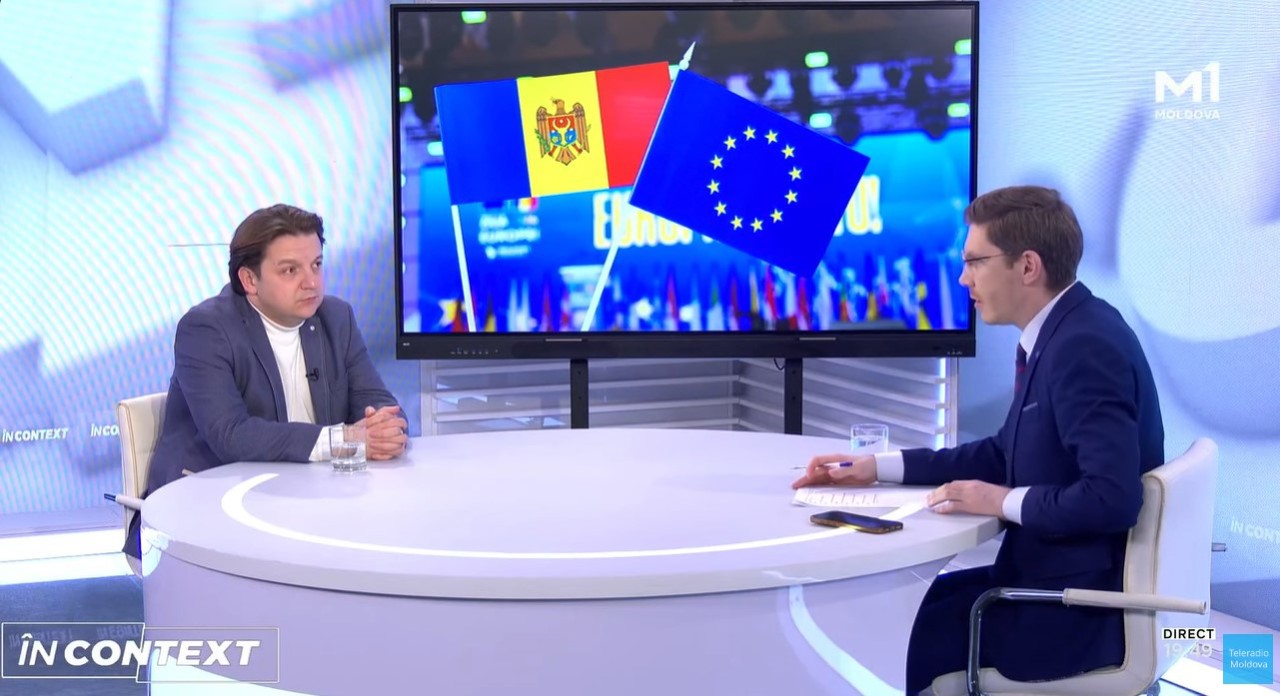
The Republic of Moldova could benefit from European investment and economic support prior to becoming a member state of the European Union (EU) through a gradual integration mechanism. This model would strengthen the country's candidate status, and according to Watchdog expert Andrei Curăraru on the Moldova 1 show, "the situation must be leveraged to the country's advantage."
The EU is currently considering several solutions. We can benefit from a gradual integration process, which would provide significant advantages before achieving full membership, particularly access to the four fundamental freedoms: the movement of people, goods, services, and capital. This process would enable us to work in member states, attract foreign investment, and benefit from European financing. Once we enter this "entrance hall" of the EU, we will have the assurance of an irreversible trajectory towards accession, declared Andrei Curăraru.
The rapid opening of negotiation chapters serves as a political signal of confidence from Brussels. However, he stressed the importance of being objective and acknowledged our shortcomings.
"This is an unprecedented situation for the Republic of Moldova—no other country, not even Ukraine, has managed to open all negotiation chapters this quickly. This fact demonstrates that our progress is real and is being positively evaluated in Brussels. Furthermore, the technical opening of these chapters can facilitate the disbursement of additional funds in the future. Each reform is directly linked to economic growth and concrete projects that could not be realized without financial support from European partners. Therefore, this is an achievement that should not be underestimated. For the Republic of Moldova, this path can be seen as a 'shortcut,' considering that many countries took years to open all negotiation chapters," the Watchdog expert pointed out.
The EU is providing Chisinau with access to funds, and the Economic Growth Plan serves as the foundation for ensuring national stability.
"There has been an unprecedented increase in private investment in the Republic of Moldova, which is directly linked to this Economic Growth Plan. The immediate effects include significantly lower inflation rates and reduced uncertainty compared to previous years. The EU's decision to invest in the Republic of Moldova demonstrates that we possess the structural stability necessary for these investments," explained Andrei Curăraru.
In terms of financial commitments, the expert highlights the Government's ambition to exceed EU estimates of private capital attracted through European guarantees, which are used to reduce credit costs for local businesses.
"The agreement signed with the EU aims to attract at least three billion euros in private investments, in addition to the roughly two billion euros in European funds. However, the government has set more ambitious goals, proposing to attract up to four billion euros from the private sector. These investments will target strategically important areas, including energy, information technology (IT), and sustainable agriculture. A crucial aspect of EU support is stimulating the local economy through financial guarantees that significantly lower credit costs for entrepreneurs," concluded Andrei Curăraru.
On March 17, 2026, the Republic of Moldova took an important step in its EU accession process by launching technical negotiations for the final three groups of accession chapters: Competitiveness and Inclusive Growth, Green Agenda and Connectivity, and Resources, Agriculture, and Cohesion.
While the Republic of Moldova is making significant progress, the official opening of negotiations is contingent on consensus among the EU member states. Currently, Hungary is opposing Ukraine's accession to the EU. In this context, the European Union's Commissioner for Enlargement, Marta Kos, stated that the accession processes for both the Republic of Moldova and Ukraine do not follow a fixed timeline; rather, they are based on the merits of each country and their accomplishments in key areas.