60.8% of Moldovan diaspora would vote for union with Romania
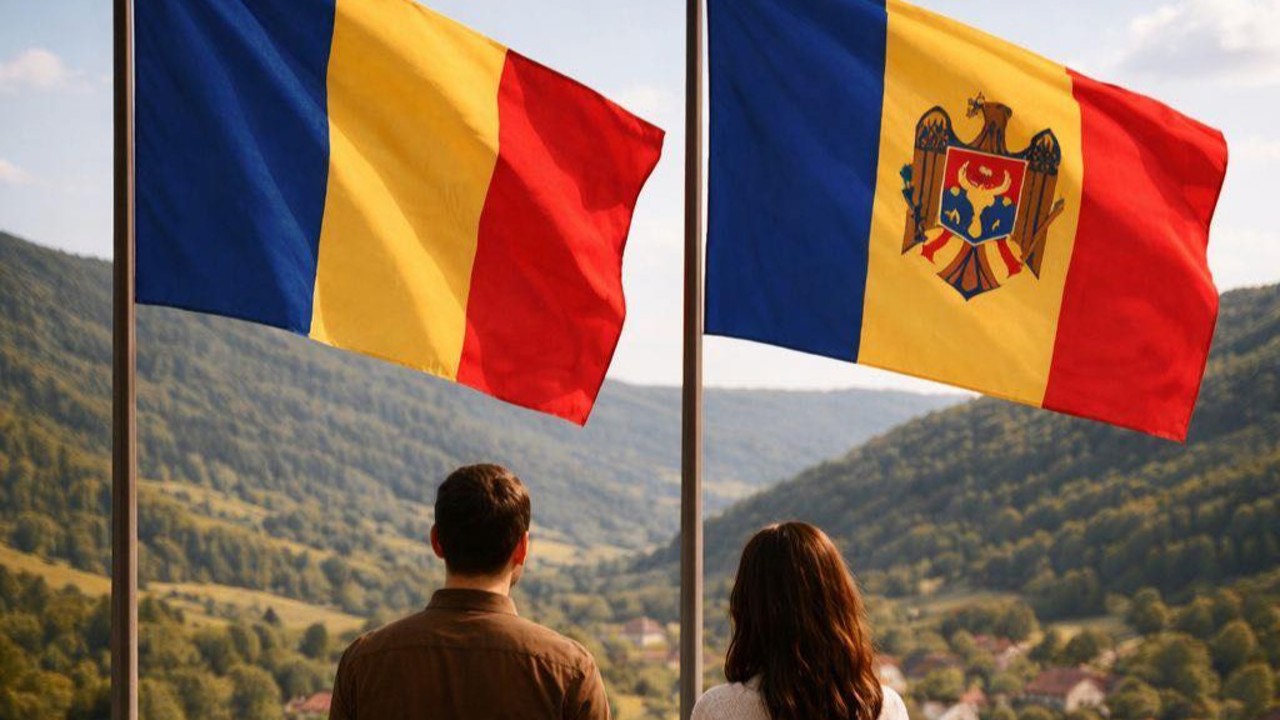
A significant proportion of Moldovan citizens would support unification with Romania in a potential referendum scheduled for “next Sunday.” According to a survey conducted by the sociological research company Ates Research, 44% of respondents in Moldova and 60.8% of Moldovans living in the diaspora favor unification.
At a press conference on March 25, Iulian Gramațki, a researcher and doctor of economics, stated "In the event of a referendum, the YES option would win with 55–58% of the vote."
He emphasized that "the diaspora is significantly more pro-Romanian, more supportive of union, and better informed."
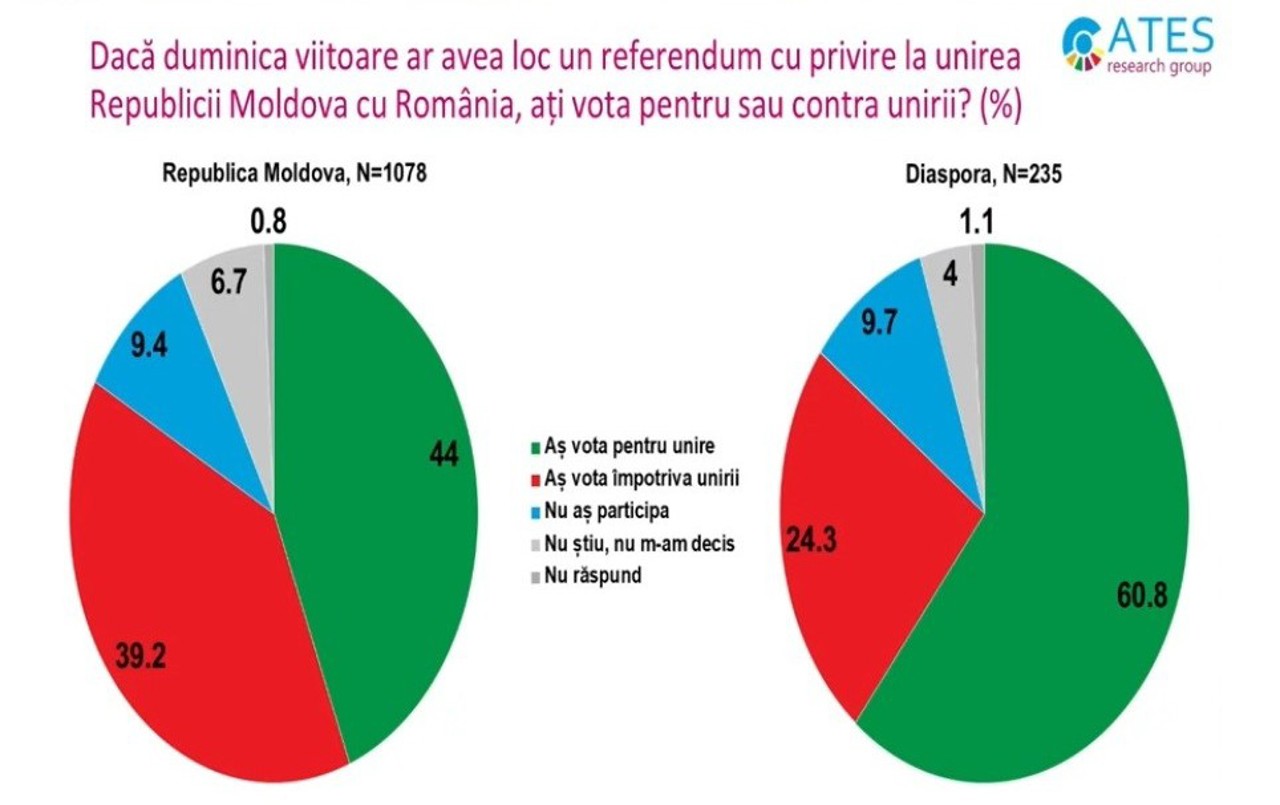
39.2% of respondents in the country and 24.3% in the diaspora would vote against unification with Romania. The remaining respondents have either not decided whether they will participate in such a referendum or have chosen not to answer.
In a survey conducted within the Republic of Moldova, which included 1,078 participants from 320 localities, 37% of respondents believe that unification with Romania would bring more advantages, while 33% think there would be more disadvantages.
Among the diaspora, 52.1% of those surveyed believe that unification of the Republic of Moldova with Romania would offer more benefits. It is important to note that this survey was conducted in 12 countries with the highest voter turnout during the parliamentary elections in September 2025.
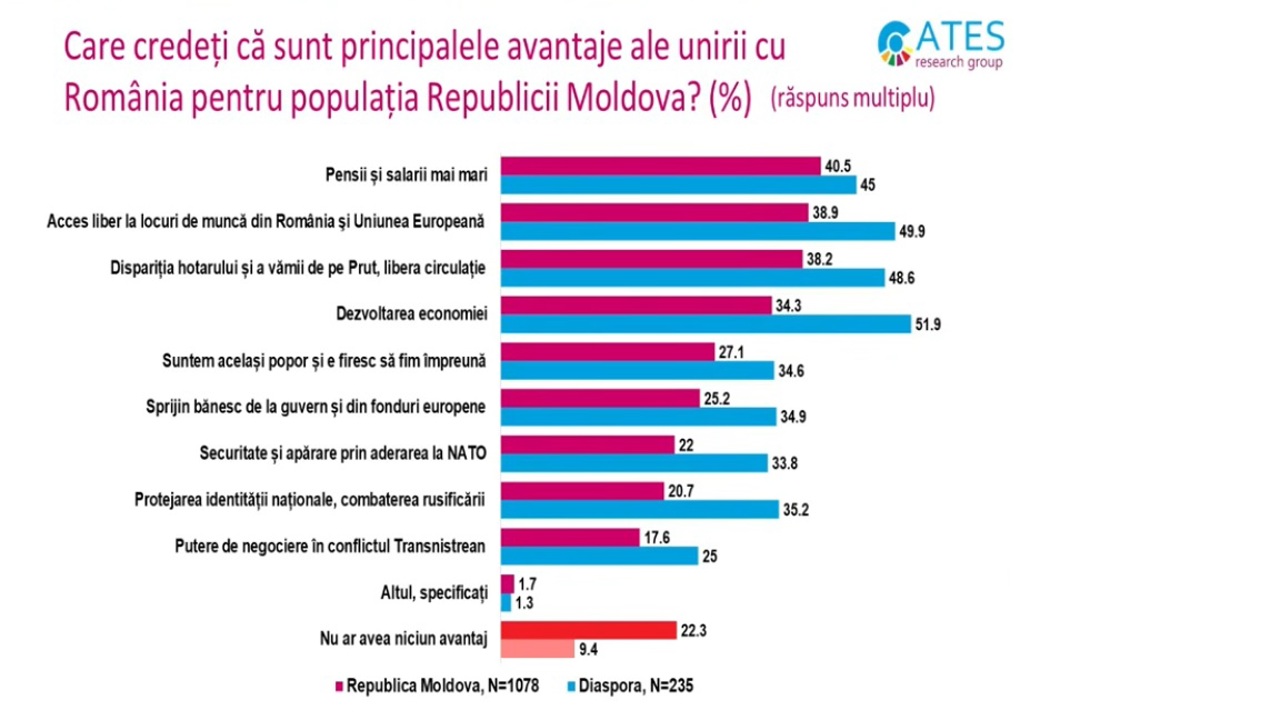
The advantages most frequently mentioned by respondents include economic benefits such as higher pensions and salaries, access to job opportunities, free movement, and overall economic development.
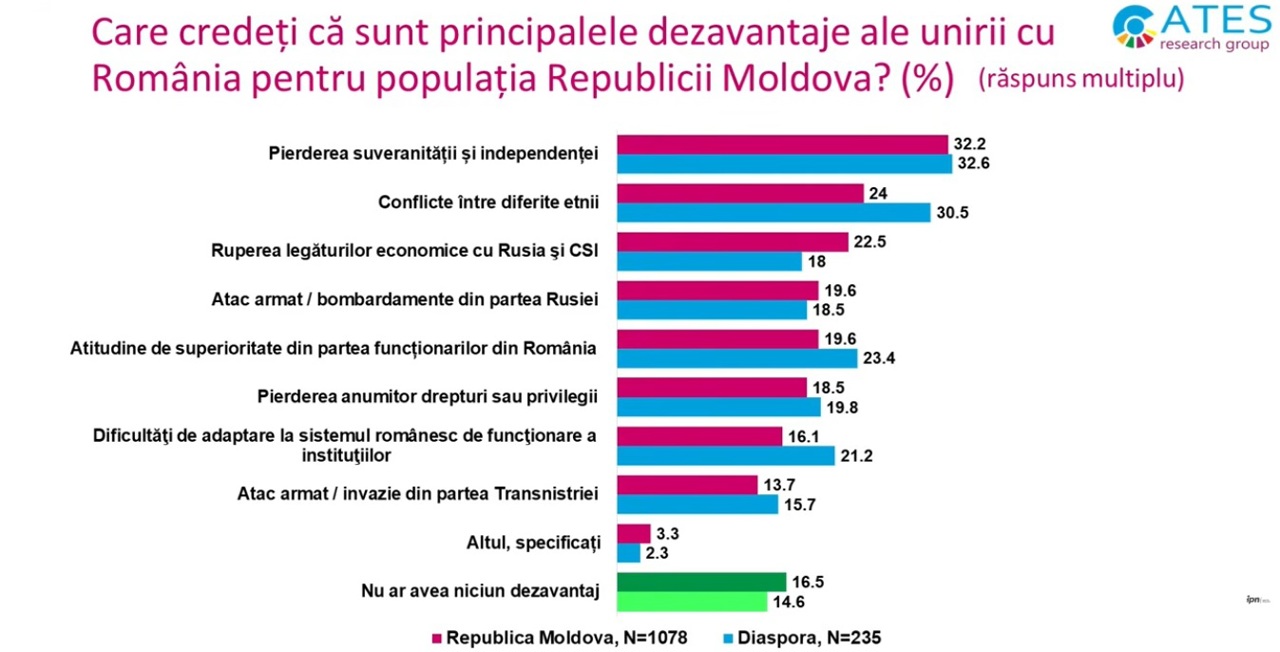
Conversely, the most commonly cited disadvantage is the potential loss of sovereignty and independence, consistently highlighted in both the Republic of Moldova and the diaspora. Other concerns include interethnic tensions and the possible severance of ties with Russia.
When asked about the timeline for achieving unification, the most common response among those who believe it is possible was "in the next 2–4 years."
The respondents attributed the decisive role in achieving unification primarily to the citizens of the Republic of Moldova, followed by the political class, and only afterward to external forces. Iulian Gramaţki noted that this indicates "respondents are confident that they themselves exercise sovereignty and make decisions on matters of national interest, more than anyone from outside."
Regarding the main obstacles to the unification of the Republic of Moldova with Romania, Iulian Gramaţki pointed out, "Our study found that the dominant perception in public discourse, echoed by the ruling political class, media, and opinion leaders, is that the population of the Republic of Moldova does not desire unification. This message has been deeply ingrained."
However, the researcher emphasized that the reality is different: a significant number of respondents expressed their support for unification, challenging the prevailing perception that the population is opposed to it.
The research also reveals a growing sense of Romanian national identity among respondents, with many identifying as ethnic Romanians or Romanian speakers and asserting that Romanians and Moldovans are, in fact, the same people.
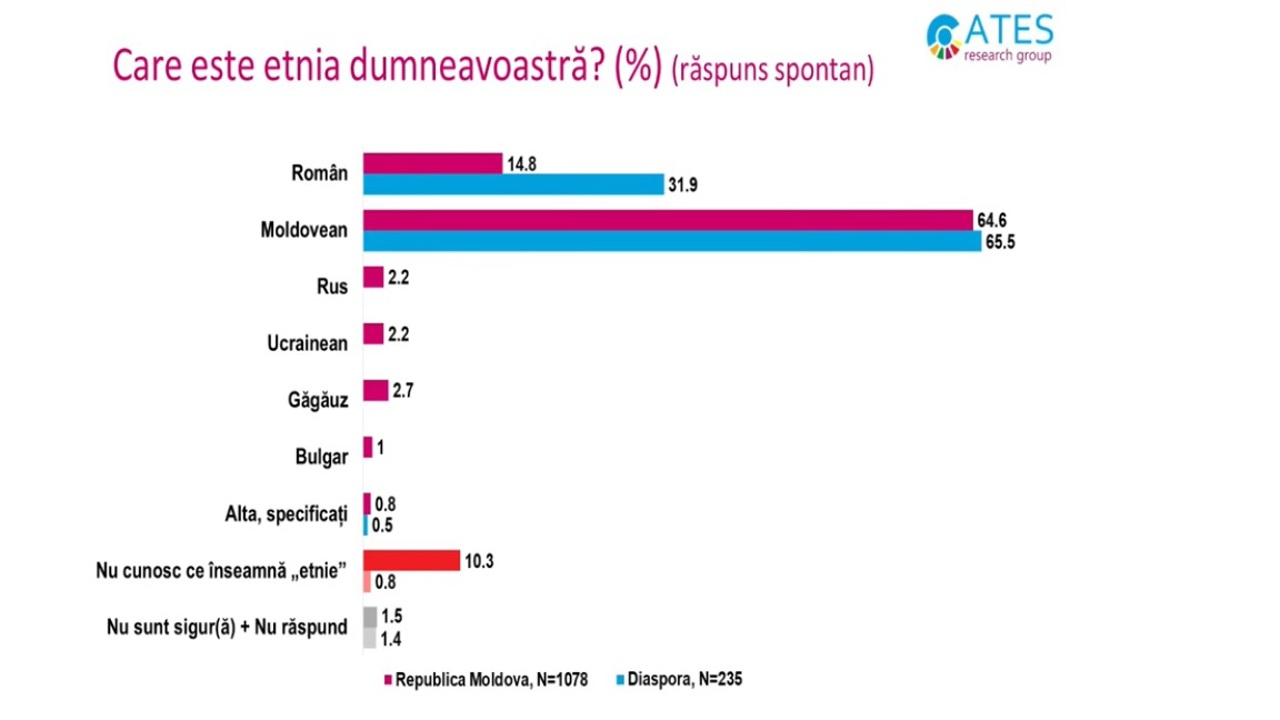
In a recent sample from the Republic of Moldova, nearly 15% of respondents identified as ethnic Romanians, while approximately 65% identified as ethnic Moldovans. In the diaspora, the percentage of individuals who identify as Romanians is significantly higher, reaching about 32%.
Iulian Gramațki noted, “In the 2024 census, only 8% of respondents identified as Romanians.”
Interestingly, the researcher observed that 10% of respondents from the Republic of Moldova do not understand what "ethnicity" means. In contrast, respondents in the diaspora are much more informed on this topic.
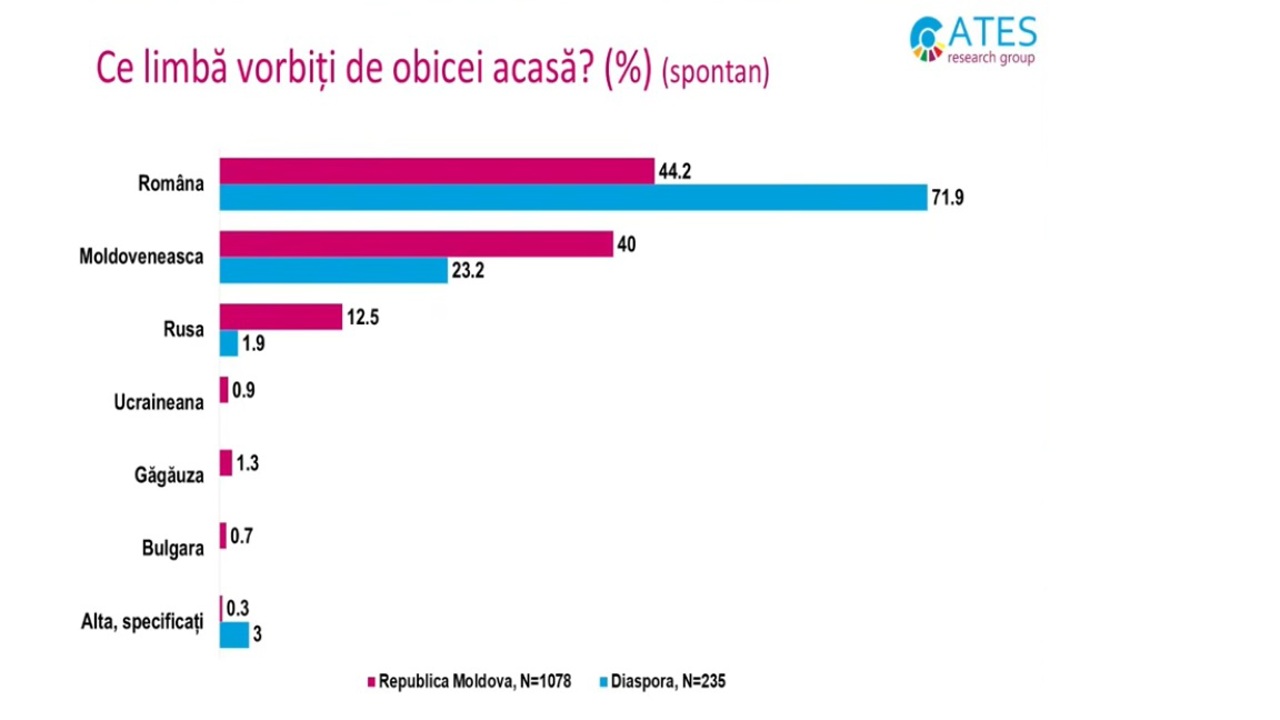
Regarding language use, 44.2% of respondents in the Republic of Moldova reported speaking Romanian, while 40% reported speaking Moldovan. Unlike the census results, those who claim to speak Romanian are now in the majority. In the diaspora, this percentage is even higher, estimated at about 72%.
Iulian Gramațki noted that the percentage of union supporters is higher among those who identify as Romanian, indicating that “national identity is not the only reason some individuals support the union.”
He stated, “We have 80% support for the union among voters of the Action and Solidarity Party, two-thirds among those with pro-European views, and only 15% among ethnic minorities. This suggests that information campaigns could be targeted effectively to increase the number of union supporters.”
Veronica Ateș, the head of the sociological research company Ates Research & Consulting, mentioned that the margin of error for the research is 3% in the country and 6% for those living abroad.