Satoshi and Dara champion national anti-violence campaign
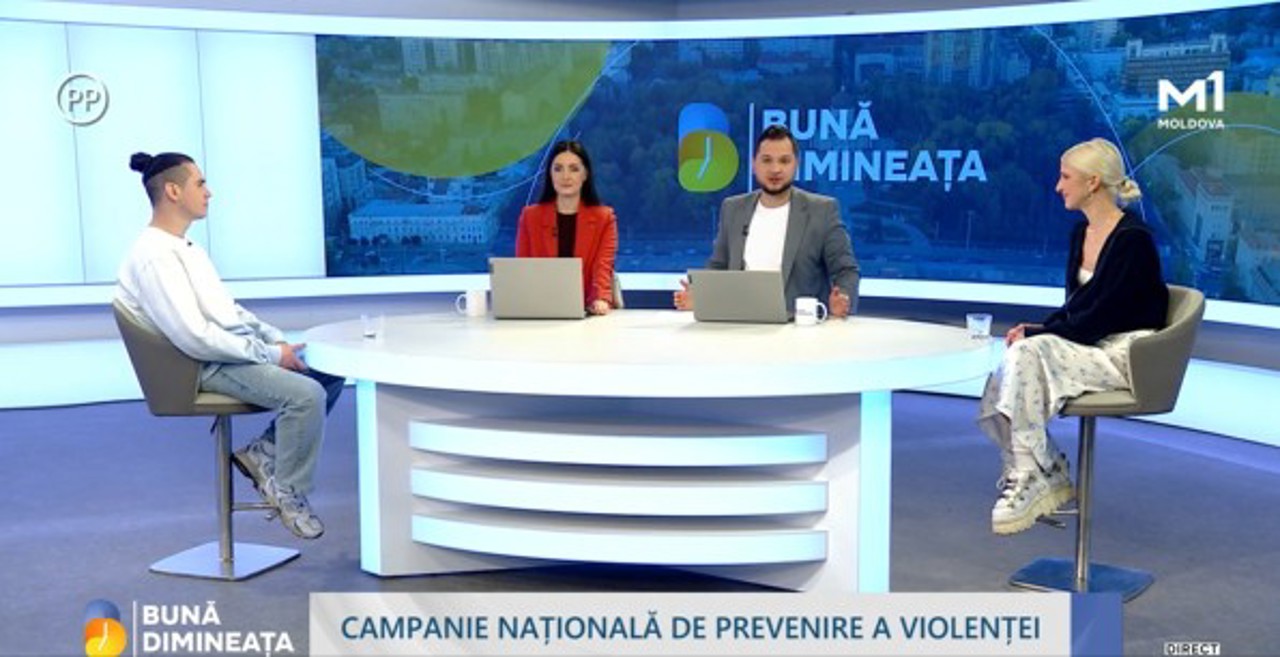
Performers Satoshi and Dara participated in the national violence-prevention campaign "Power of Example", launched by authorities on April 2. Their song, "Pentru cei care vin", aims to raise awareness about the issue of violence in society and to change how violent behaviours are perceived and communicated among individuals.
The "Power of Example" campaign is a long-term initiative running from 2026 to 2030, organized under the auspices of the Government of the Republic of Moldova. It is initiated and coordinated by the National Agency for the Prevention and Combating of Violence against Women and Domestic Violence (ANPCV), in collaboration with UN Moldova and with financial support from the Government of Great Britain.
Satoshi and Dara have accepted the organizers' proposal to convey messages against violence through art.
"We responded to a proposal to speak out on a subject that we find both relevant and engaging. The initiative, presented clearly in terms of ideology and direction by the National Agency for the Prevention and Combating of Violence, provided us with the freedom to create and define our own tone of voice, as well as the emphasis we wanted to place on this issue," Satoshi stated in the show "Bună Dimineața" on Moldova 1.
While recognizing that violence is a "far too broad a subject," Dara noted that their three-minute song encompassed everything that is "necessary and relevant" for the Republic of Moldova.
"We are responsible for future generations; let's strive to be the best example possible and demonstrate that any problem can be solved without resorting to violence. I have felt, witnessed, and seen friends and loved ones endure distressing situations, and everywhere I observe the same troubling pattern: the 'normality' handed down from generation to generation, where grandmothers and mothers lived similarly and were advised to 'wait a little longer.' This attitude serves as an excuse for violence, unfortunately perpetuated through the generations. Through a line in the play, we attempted to convey very clearly that this cycle should not continue. It is essential to recognise that the behaviours of our mothers or grandmothers are not necessarily acceptable for us. As we are now in 2026, we have the opportunity to break this cycle and pursue a new direction, where normality can embody love, trust, and other positive values," the artist said.
Two performers urged all victims of violence to seek information, as there are mechanisms and institutions available that can provide support. They encouraged individuals to have the courage to reach out for assistance.
At the same time, the artists recommended that pupils and students participate in public discussions, debates, and engage in the national campaign to prevent violence, titled "Power of Example."
This campaign will unfold in several stages and will feature thematic mini-campaigns that focus on the primary factors that perpetuate violence: rigid gender roles, acceptance of violence, stigmatization of victims, and the notion that violence is a private issue. Through these initiatives, the goal is to shift the perspective from viewing violence as an individual or private concern to understanding it as a shared responsibility that can be prevented through positive behavioral models.
According to data from ANPCV, seven out of ten women have experienced some form of domestic violence, and three out of ten children have witnessed such situations. Additionally, a concerning number of adolescents equate aggression and control with power, and nearly half of boys believe that violence can be justified under certain circumstances. The absence of positive role models contributes to the continuation of these behaviors, which are learned and replicated within families, schools, communities, or online.
We remind you that last year, over 20 cases of femicide were recorded in the Republic of Moldova. The issue gained public attention again following the tragic death of Ludmila Vartic from Hâncești, who allegedly took her own life as a result of the violence she endured within her family.