The end of speculative buying: Mortgage reliance hits record 70% in Moldova’s capital

The real estate market in Chisinau is undergoing a severe structural contraction, marked by a sharp decline in transactions and an unprecedented shift toward mortgage-backed buying. According to an analysis by economist Veaceslav Ioniță of IDIS „Viitorul,” data from the first quarter of 2026 confirms a definitive end to the post-pandemic growth cycle.
Market volume hits decadal lows
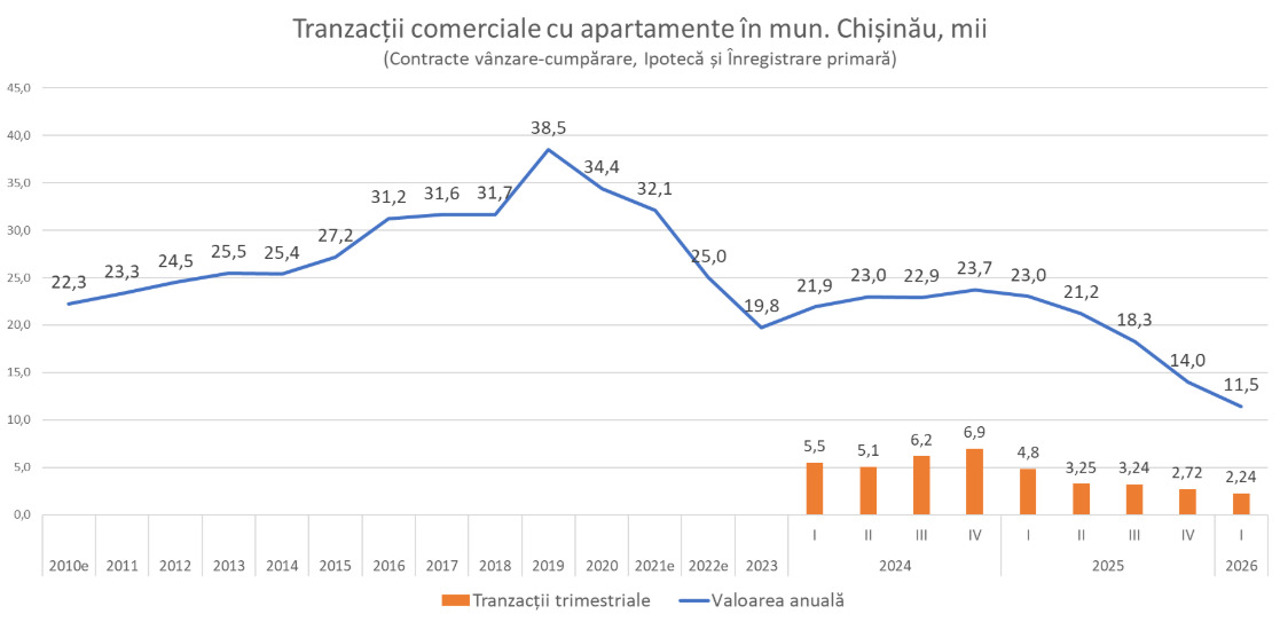
In the first three months of 2026, approximately 2,240 apartments were traded in the capital, representing a more than two-fold decrease compared to the same period last year. The total volume for the past 12 months has fallen to roughly 11,500 transactions, the lowest level recorded in decades.
This downturn is not a gradual decline but a "staged correction" following years of rapid appreciation. For the first time in history, Chisinau’s share of the national real estate market has dipped below 50%, signaling a nationwide cooling of the sector.
Exit of speculative investors
The most significant change is the near-total disappearance of investment-driven buyers. Stricter regulations on cash payments and enhanced scrutiny regarding the provenance of funds have pushed speculative capital out of the market.
"The market has been 'cleansed' of speculative capital," Ioniță noted, explaining that the current landscape is now defined by utility-driven buyers rather than those seeking quick returns or capital preservation.
A mortgage-driven reality
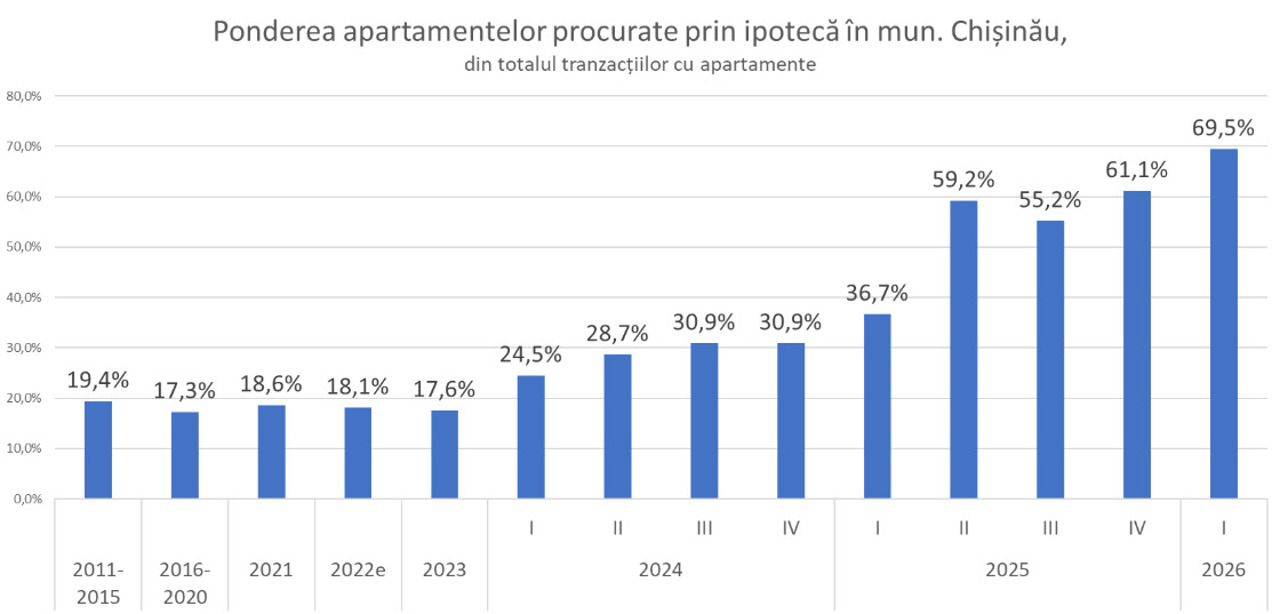
With the exit of cash investors, bank financing has become the primary engine of the market. Nearly 70% of all transactions are now finalized through mortgages, a record high for the Moldovan capital.
The market has effectively transitioned from an investment vehicle to a basic necessity. While the industry has not collapsed, it has reset to a model limited by actual household incomes and banking credit standards, making rapid future growth unlikely in the short term.
Translation by Iurie Tataru