Flowers over the Prut: When Romania defied the Soviet border
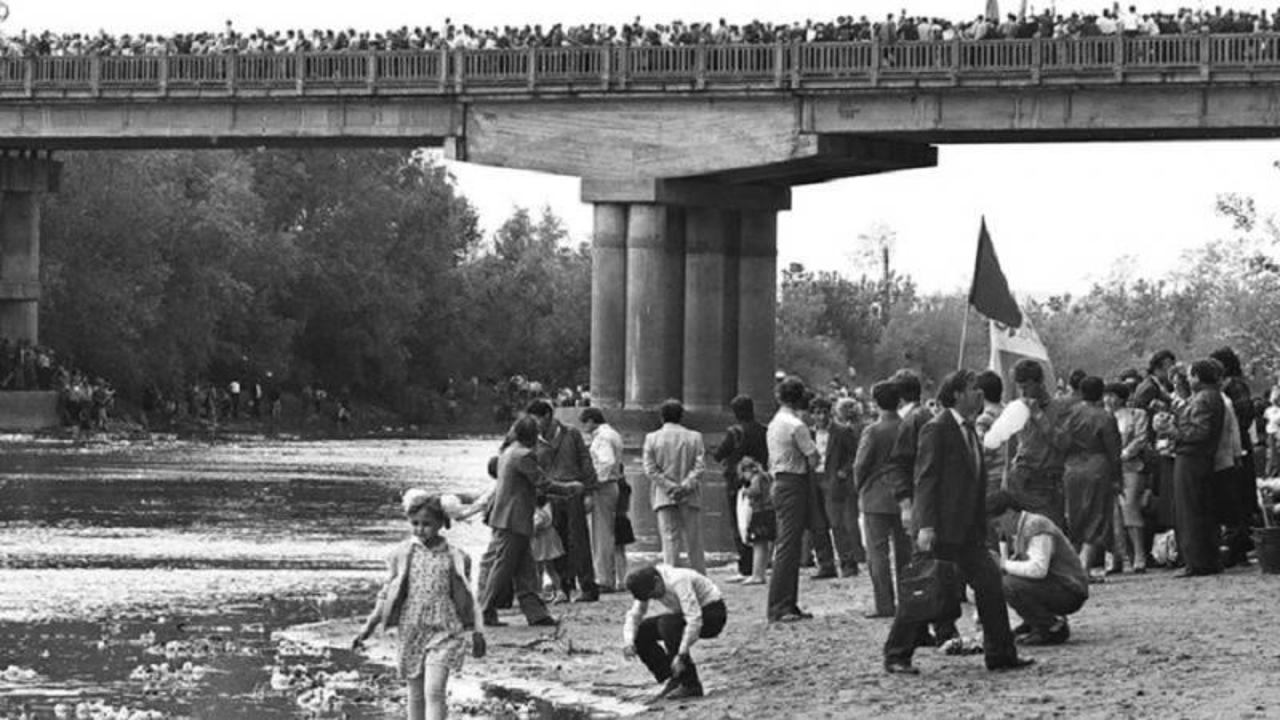
On May 6, 1990, hundreds of thousands of Romanians gathered on both banks of the Prut River to stage the "Bridge of Flowers," a historic defiance of the Soviet border. This symbolic event allowed citizens from Romania and the then-Moldavian SSR to cross the frontier without passports for the first time since World War II.
The massive pilgrimage spanned eight border points across a 700 km stretch. Organized by cultural leagues from Bucharest and Chișinău, the action marked a pivotal moment in the national rebirth movement, signaling the imminent collapse of Soviet influence in the region.
A symbolic collapse of the Iron Curtain
At noon, synchronized church bells rang on both banks as priests performed religious services. Participants launched millions of flowers into the water, creating a literal floating bridge. This gesture symbolized a collective desire for peace and the restoration of long-severed cultural ties.
"The Prut has always been a water that unites two banks of Moldova," stated a manifesto from the era. Leaders of the movement emphasized that while the river had physically divided families, the spiritual and national consciousness of the people remained boundless.
The "Berlin Wall" of the East
The event saw the participation of key political figures, including future presidents and ministers. Ion Ungureanu, then Minister of Culture, compared the Bridge of Flowers to the fall of the Berlin Wall, predicting it would dismantle the artificial barriers imposed by the Cold War.
Mircea Druc, former Prime Minister of Moldova, recalled the visible confusion of the Soviet border guards. "They had never seen anything like it," he noted, highlighting the shift in power dynamics as the crowd reclaimed the border zone through peaceful assembly.
Emotional reunions in the water
Poet Grigore Vieru was the first to cross the river in a rubber boat. He described an atmosphere of "indescribable emotional tension" where people called out names of lost relatives. In a surreal display of unity, men from both sides jumped into the Prut, dancing a traditional "hora" in the middle of the river.
A second Bridge of Flowers took place in June 1991. According to official data, over 240,000 people crossed into Romania during that event, solidifying the movement that would eventually lead to the declaration of sovereignty and independence for the Republic of Moldova.
Translation by Iurie Tataru