Moldova positioned as a key partner in Ukraine’s reconstruction
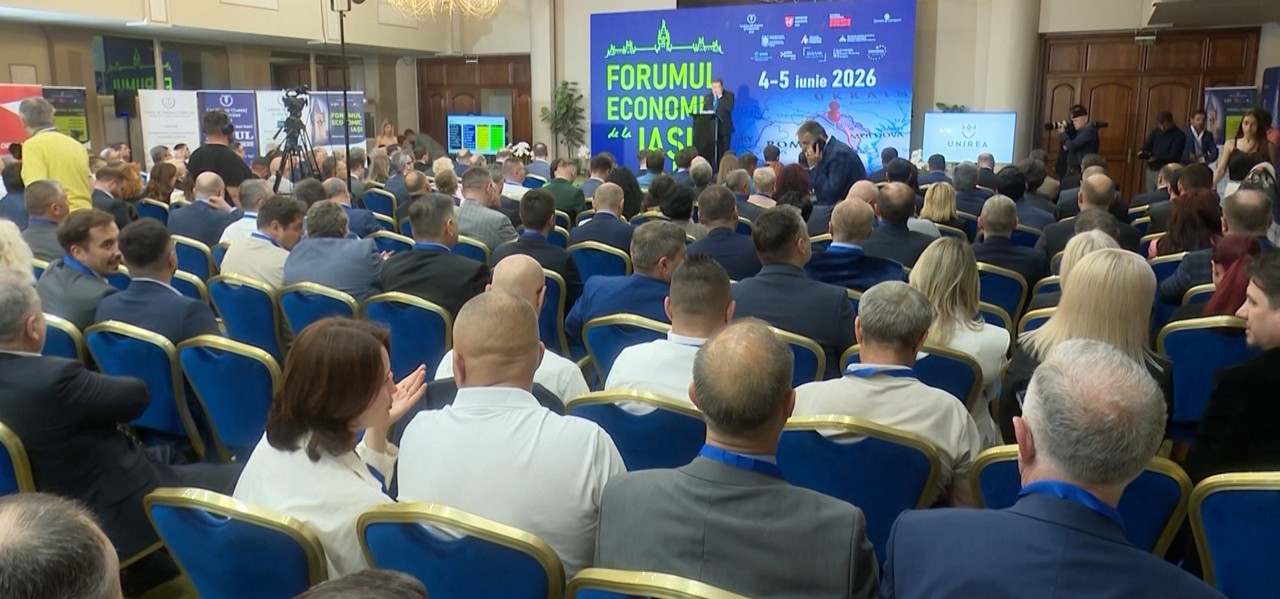
Infrastructure projects aimed at connecting the Republic of Moldova to key European corridors were discussed in Iaşi on June 4 and 5. The third edition of the Economic Forum brought together over 500 decision-makers, investors, and business leaders from Romania, the Republic of Moldova, Ukraine, and other European countries.
The discussions aimed to transform the region into a hub on the eastern flank of the European Union. Participants addressed key topics such as investments, infrastructure, digitalization, energy, and regional economic cooperation.
Romanian MEP Siegfried Mureșan stated, “The Republic of Moldova and Ukraine will become member states of the European Union. The European Union understands the importance of the Eastern Neighborhood for the security and stability of the European Union as a whole.” He emphasized the significance of infrastructure projects in attracting investors and in creating “a bridge to the Republic of Moldova and to Ukraine.”
Romanian Minister of Economy Irneu Darău highlighted that the Republic of Moldova must take a leading role in Ukraine’s reconstruction. He noted, “We have competition from other countries in Eastern Europe. Romania and the Republic of Moldova must be there. Infrastructure will help.”
The completion of the Moldova and Unirii highways is expected to provide strategic connectivity with Romania and the European Union, transforming the Republic of Moldova into a regional logistics hub and accelerating its accession to the EU while boosting economic prosperity.
Secretary of State in the Ministry of Transport of Romania, Irinel Ionel Scrioșteanu, remarked, “This area and the connection between Ungheni and Siret are of strategic importance and must be completed as soon as possible for both economic development and the defense of the eastern flank.”
The Republic of Moldova is currently conducting feasibility studies for the extension of the Unirii highway from Ungheni to Chișinău, as well as for the construction of the first electrified railway line with European gauge on the Chișinău-Ungheni segment.
According to Mircea Păscăluță, the Secretary of State at the Ministry of Infrastructure and Regional Development, these feasibility studies are expected to be completed by 2027, with support from the European Union. He stated, “There are grants and technical assistance provided by the EU, allowing us to utilize the financial mechanisms available starting in 2028. We are discussing pre-accession funds and financial resources available for infrastructure.”
At the Iași Economic Forum, discussions regarding the Republic of Moldova centered on accelerating economic integration with Romania and the European Union by accessing European funds, attracting investment, and advancing connectivity projects.
Author: Daniela Nemerenco