Transnistrian conflict origins and lessons: “A KGB project”
Over three decades after the Nistru War, the Transnistrian conflict remains a highly sensitive issue in the Republic of Moldova. The interpretation of the events leading to the establishment of the separatist region continues to spark debate.
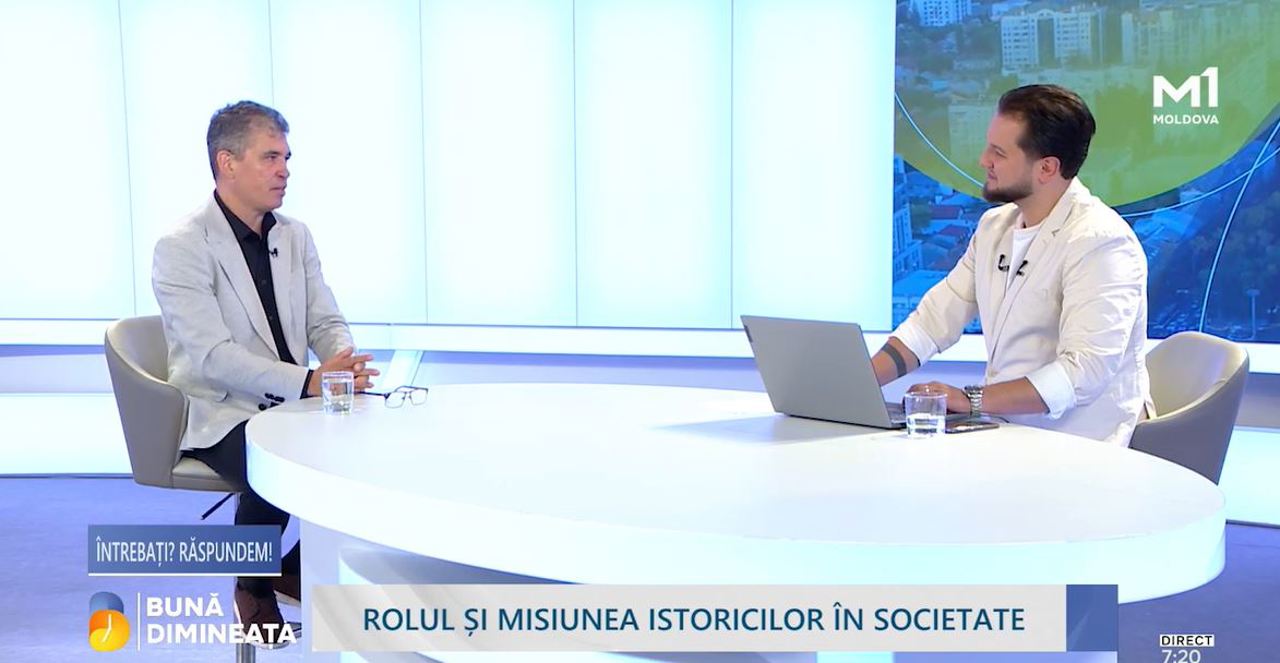
On the occasion of Historians' Professional Day, celebrated on June 18, PhD Sergiu Musteață was invited to the "Bună Dimineața" program on Moldova 1, where he discussed various topics related to the past and society's historical identity.
In addressing the Transnistrian issue, the historian pointed out that the roots of the conflict can be traced to the final years of the Soviet Union and the events surrounding its collapse.
"The existence of this separatist area, commonly referred to as a republic, is a KGB project," stated Sergiu Musteață.
He emphasized that the emergence of separatist structures was not a random occurrence. The historian recalled that in 1990, the so-called "Gagauz Republic" and the "Dnestrian Moldovan Republic" were proclaimed amidst the tensions arising from Moldova's separation from the Soviet Union.
Moscow's influence was crucial both at the onset of the conflict and in sustaining the current situation.
"The strings are pulled from here, from Moscow, and the keys are still in Moscow," the historian declared.
According to historian Sergiu Musteață, the armed confrontations of 1992 were supported by Russian military forces present in the region at the time.
He stated, "The Nistru War was a provocation by the socialist forces on the left bank of the Nistru, backed by the Russian army."
Musteață emphasizes that understanding the causes of the conflict is crucial for new generations and for countering misconceptions about the past. He believes one of the key responsibilities of historians is to explain historical events based on documented evidence, free from ideological or political influences.
"The historian's task is to tell the truth, even if it hurts or if we do not like it," Musteață asserted.
He also pointed out that studying the past is essential to understanding the present, and that education should foster critical thinking and deepen understanding of the processes that have shaped the Republic of Moldova.