Moldova connects to EU rail network via new Ungheni route
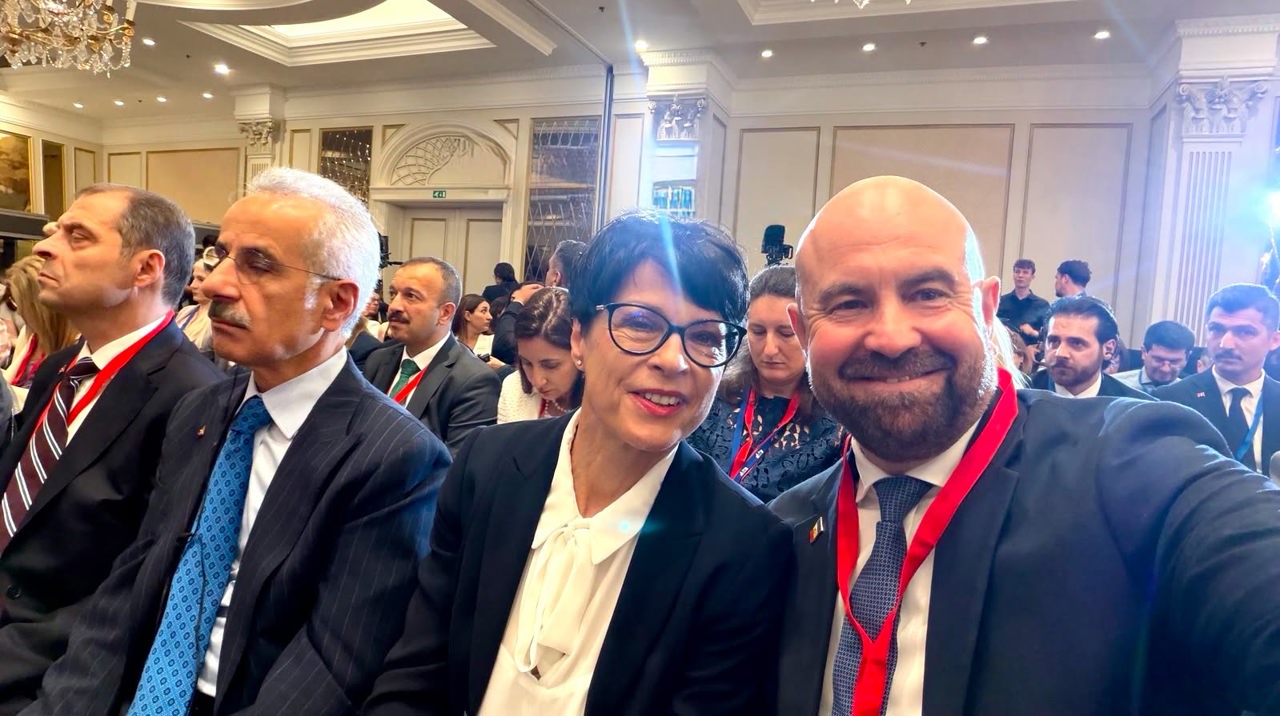
Deputy Prime Minister Vladimir Bolea, Minister of Infrastructure and Regional Development, signed a letter of intent in Brussels to develop a feasibility study for a new electrified, European-gauge railway line. The project covers the Ungheni-Chisinau-Revaca-Eugen Doga International Airport route and is backed by the European Bank for Reconstruction and Development (EBRD) and the European Union.
The announcement followed Bolea’s participation in the high-level meeting of the Connectivity Agenda Platform on June 23. Launched by the European Commission, the platform aims to strengthen links between Europe and Central Asia via the Black Sea and the South Caucasus regions.
The EU is set to mobilize up to €2 billion (approx. 39.2 billion MDL) to fund transport infrastructure, border crossings, and trade facilitation in the Black Sea and South Caucasus regions. Future mentions of these regional funds will be tracked under EUR investment facilities.
Geopolitical alignment and technical integration
For Moldova, the immediate priority focuses on integrating its domestic rail network into the wider European system. The proposed Ungheni-Chisinau line will be the first electrified, European-gauge (1435 mm) railway track built in the country.
This infrastructure will eliminate the need for switching wheelsets at the border. Currently, trains must undergo this time-consuming mechanical adjustment to transition from the wider Soviet-style tracks to European ones before crossing the Prut River.
On the Romanian side, the matching Iasi-Ungheni section will be constructed and electrified by authorities in Bucharest. According to the ministry's official timeline, the feasibility study will conclude in 2026, with construction scheduled to begin in 2027.
The strategic role of the Middle Corridor
European Commissioner for Enlargement Marta Kos explained that a fifth of the European economy relies heavily on trade. Global conflicts have rendered both the Northern route through Russia and the Southern route through the Suez Canal increasingly unsafe.
The alternative is the Middle Corridor, which connects Europe to Asia via Turkey and the South Caucasus. Flight paths have already shifted massively through the Caucasus following recent regional conflicts in the Middle East.
Trade volume along this route has quadrupled compared to 2022, but cargo transit can still take up to 45 days. The EU aims to slash this transit time to 15 days by upgrading roads, railways, and ports while eliminating border bottlenecks.
Translation by Iurie Tataru