Moldova anchors EU path in internal reforms and military defense
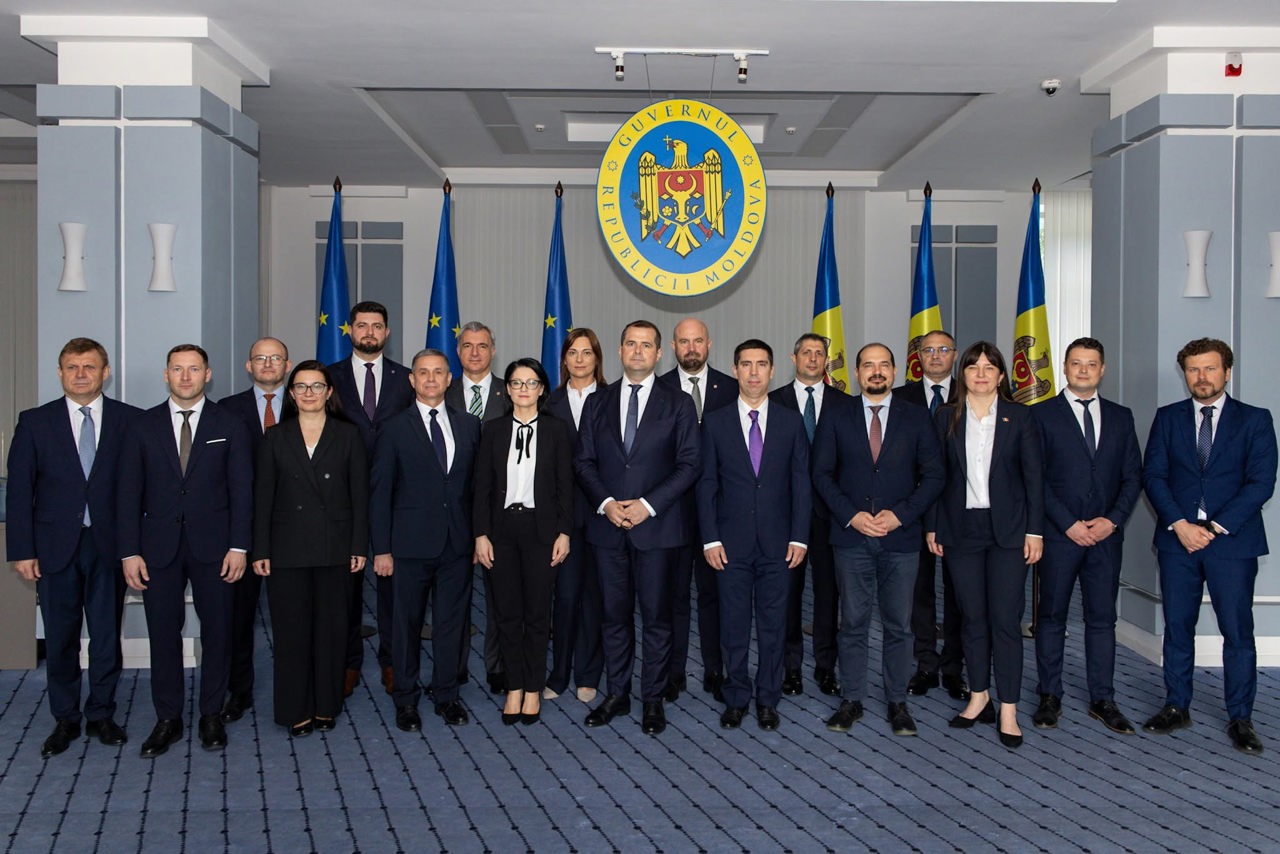
Prime Minister-designate Vasile Tofan has unveiled a government program aimed at turning Moldova's diplomatic service into an engine for EU accession, foreign investment, and national security, while accelerating the modernization of the National Army.
Political analysts note that while the plan introduces unprecedented technical rigor, key goals remain vulnerable to external geopolitical factors beyond Chisinau's control.
Shift to domestic policy
The governing program, titled "European Economy, Efficient State," places European integration at the center of Moldova's foreign policy. However, expert Andrei Curăraru of WatchDog highlights a fundamental strategic pivot: treating EU integration primarily as a matter of domestic policy rather than mere external diplomacy.
Key Performance Indicators (KPIs) in Tofan's Program:
- Annual implementation rate exceeding 90% for each negotiation chapter.
- Full opening of all six EU negotiation clusters.
- Digitalization and performance auditing across all consular services.
Under the new strategy, diplomatic missions will be held accountable for economic outcomes, including foreign direct investment, export promotion, and tourism growth.
Fragile assumptions and external risks
Bucharest-based political analyst Cristian Pîrvulescu praises the program's technical clarity but warns that its primary goal—securing unanimous support from all 27 EU member states—remains fragile.
Pîrvulescu emphasizes that Moldova's path depends heavily on whether Brussels decouples Chisinau's EU bid from Ukraine's accession track, as well as potential vetoes from individual member states. Consequently, signing the EU Accession Treaty by 2028 serves more as a mobilizing target than a guaranteed timetable.
Curăraru similarly cautions that Moldova lacks a "Plan B" if EU countries such as Bulgaria or Slovakia raise objections during negotiations.
Security strategy and Russian threats
The government program prioritizes combating hybrid threats, cyberattacks, and disinformation while deepening security partnerships with NATO, Romania, the United States, the United Kingdom, and Turkey, all within Moldova's constitutional neutrality framework.
Analyst opinions diverge on how the document addresses Moscow's influence:
Cristian Pîrvulescu: "The program addresses Russia ambiguously under the broad term of 'hybrid threats.' A realistic strategy must clearly distinguish between the Kremlin's destabilization efforts and pro-Russian domestic citizens who should not be treated as adversaries."
Andrei Curăraru: "Russia is clearly defined as the primary national security threat. The program explicitly links Moscow to energy leverage, electoral interference, anti-European propaganda, and cyberattacks aimed at derailing Moldova's Western path."
Building a modern defense force
On national defense, the Tofan administration plans to transform the National Army into a professional, mobile, and interoperable force.
The program outlines strategic investments in early warning radar systems, anti-drone air defense, secure communications, and cyber protection. It also encourages private sector involvement in manufacturing interceptor drones locally.
Both experts agree that constitutional neutrality forces Moldova to rely on international partnerships. While modern air defense capabilities remain in their infancy, deepening defense ties with the EU, NATO, and Romania represents Chisinau's only realistic pathway to protecting critical infrastructure and maintaining regional stability.
Translation by Iurie Tataru