Moldova aligns trade and arms control policies through Cluster 6
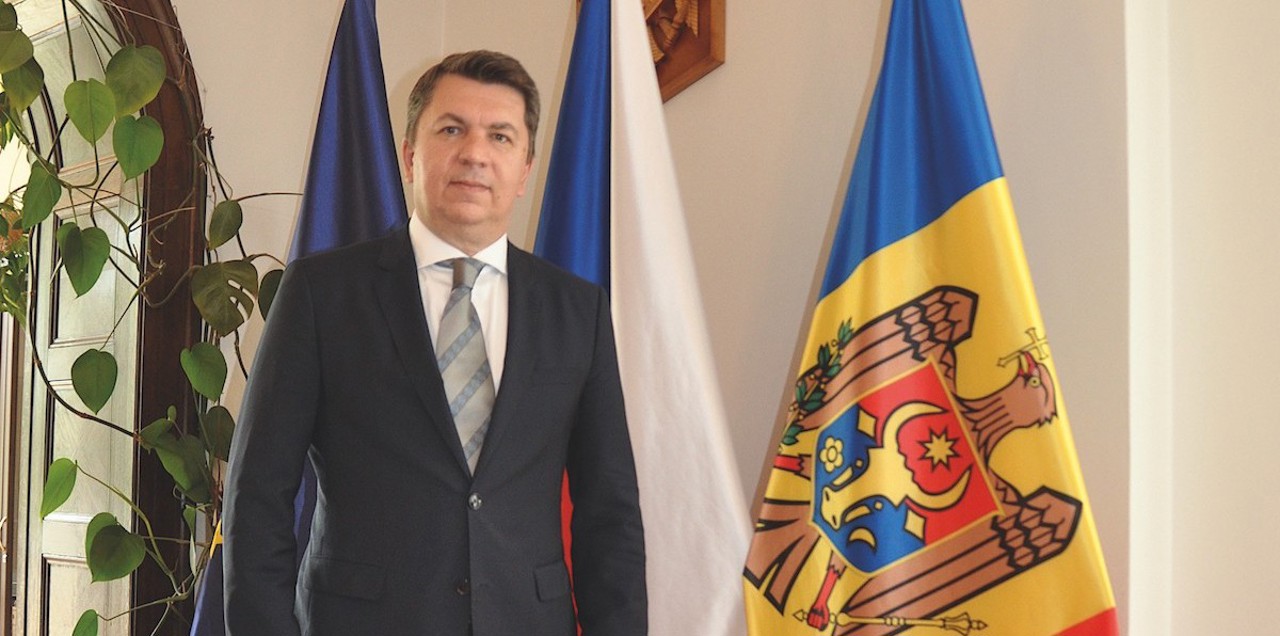
The Republic of Moldova has been implementing some of the requirements outlined in Cluster 6 - "External Relations," which was recently opened for negotiations with the European Union, for several years now. This is particularly true for the requirements related to foreign policy and security, according to Alexandru Codreanu, head of the General Directorate for Cooperation with the European Union within the Ministry of Foreign Affairs (MFA).
After officially starting accession negotiations with the European Union on Cluster 6 - "External Relations," the Republic of Moldova is set to harmonize its national legislation with the acquis communautaire, review its international trade agreements, and enhance the institutional capacities required to implement European Union standards.
"The Republic of Moldova has been successfully working on these objectives for several years. For example, we align with European Union declarations, sanctions, and restrictive measures, and we will continue to do so. Regarding our common commercial policy, since the signing of the Association Agreement and the Free Trade Area in 2014, Moldova has increasingly focused on economic and trade relations with the European Union," said Alexandru Codreanu, a member of the government delegation at the third Intergovernmental Conference between the Republic of Moldova and the European Union, during an interview on the show "Vector European" on Moldova 1.
Codreanu also noted that between 65% and 70% of Moldova's exports are destined for the European Union market. Additionally, our country has free trade agreements with several regions, including the countries of the Commonwealth of Independent States (CIS), the member states of the Organization for Democracy and Economic Development - GUAM, and the Central European Free Trade Agreement (CEFTA), which includes the Western Balkan states.
At the same time, on April 1, 2025, the Free Trade Agreement with the member states of the European Free Trade Association (EFTA) - Iceland, Liechtenstein, Norway and Switzerland - entered into force, and at the beginning of 2026, the Free Trade Agreement with Turkey, in force since 2016, was updated.
After joining the European Union, the Republic of Moldova will adopt the bloc's single trade policy.
"In terms of external relations, it is about aligning the legal framework with the EU regulation on the control of exports of dual-use goods. Likewise, the regulation on the examination of foreign direct investments. The Republic of Moldova will submit to the European Commission an action plan that includes a complete inventory of international agreements concluded, with the aim of aligning them with the EU acquis. These would be the reference criteria for Chapter 30, especially trade policy," explained the representative of the Ministry of Foreign Affairs.
In this context, he said that the Ministry of Economic Development and Digitalization will initiate a dialogue with the European Commission to obtain support for Moldovan producers.
"Considering that there are some trade relations of interest to the Republic of Moldova, the Ministry of Economic Development and Digitalization will launch a dialogue with the European Commission in order to obtain assistance for our producers in order to reorient towards the new European Union market, for technical assistance to increase capacities", Codreanu stated.
Referring to Chapter 31 - "Foreign, security and defense policy", the official stated that the Republic of Moldova is already aligned to over 90 percent with European policies in this area.
According to him, one of the main reference criteria concerns the management of small arms and light weapons.
“The Republic of Moldova will adopt and implement a national program (…) in line with the EU strategy in this area. We need both normative acts, Government decisions, programs covering several institutions, including the Ministry of Internal Affairs, the Ministry of Defense and other force structures that manage small arms and light weapons, as well as training, more technical capacity, everything that provides for a much better management of this subject. We are already working on this area”, said the head of the General Directorate for Cooperation with the European Union within the Ministry of Foreign Affairs.
Alexandru Codreanu stressed that the Republic of Moldova's participation in the European Union's security policies is compatible with the country’s constitutional status of neutrality. In his opinion, the European Peace Facility is more relevant to the Republic of Moldova than the SAFE mechanism, which is intended mainly for the member states of the European Union.
"The European Peace Facility, through which we obtain resources to strengthen, for example, the air defense system, is much more important for the Republic of Moldova. We have been cooperating for about five years now and significant resources are allocated every year. At the same time, since 2024 we have a program for cooperation in the field of security and defense, which is the framework in which we discuss existing concerns and opportunities," the official said.
At the same time, through the SAFE program, the Republic of Moldova will benefit from support from Romania in order to build infrastructure projects of strategic importance, such as the country's first 5.1 kilometers of highway, which will be directly connected to the A8 highway in Romania, also called the Union Highway (Iași - Ungheni).
For the provisional closure of Chapters 30 and 31, the Republic of Moldova will have to demonstrate that it has institutions capable of effectively applying European legislation, in particular within the Ministry of Foreign Affairs, the Ministry of Economic Development and Digitalization and the security institutions.
Cluster 6, on "External Relations", includes two negotiation chapters: Chapter 30 on external relations, which covers the common commercial policy, humanitarian aid and development cooperation, and Chapter 31 on the common foreign, security and defence policy, including alignment with the positions and sanctions adopted by the European Union.
The opening of this thematic group for Ukraine and the Republic of Moldova follows the launch of negotiations on Cluster 1 - "Fundamentals" at the intergovernmental conference held in Luxembourg on 15 June 2026.
The accession negotiations are organised in six thematic clusters, which bring together the 33 chapters of the acquis communautaire, and progress in the process remains conditional on the fulfilment of the criteria and the implementation of the necessary reforms.