Moldova faces a tough winter as Daniel Vodă warns of Russian manipulation of energy bills
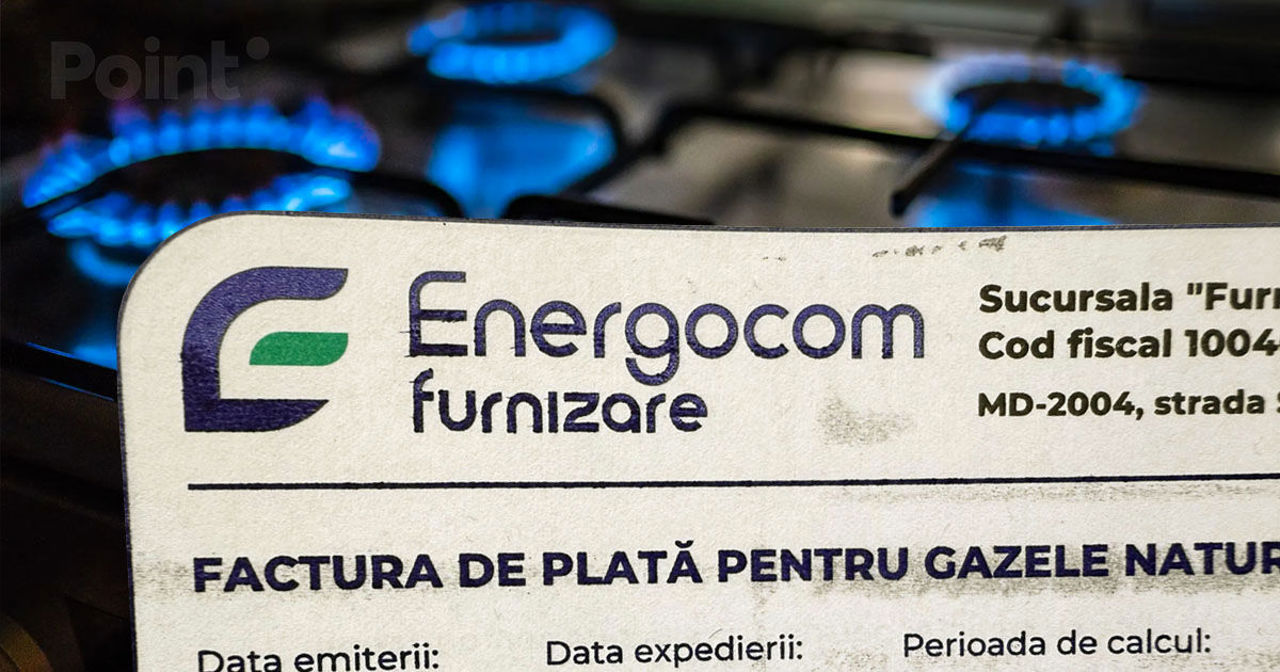
Energy needs can vary even with the same tariff and comfort level. For this reason, discussions of energy bills must also consider the condition of the home, says Daniel Vodă, an associate expert at the Institute for European Policies and Reforms, who warns that Russia will turn energy bills into a political weapon this winter.
According to the expert, rising prices are already a real burden for many families, and the regional situation is difficult; consequently, Russia will not need to manufacture discontent. Given the sharp rise in gas prices across Europe and the fact that the Republic of Moldova will need to import approximately 59% of its electricity needs during the cold season, these price hikes will inevitably be reflected in Moldovans' utility bills.
"What Russian propaganda will do, however, is shift the narrative: every higher bill will be portrayed not as the result of a volatile energy market, the war, or vulnerabilities accumulated over decades, but as the 'price of Europe' and of breaking free from the Russian energy", notes Daniel Vodă in his RFI editorial rubric.
He argues that the simple, emotionally charged message employed—that "gas used to be cheap, but now you are paying for your geopolitical choice"—is an effective form of manipulation precisely because it is rooted in a genuine problem.
"That is why the response cannot be merely geopolitical. People need to understand what drives prices and who determines them, what the state is doing to protect them, and—above all—why energy independence comes at a cost in the short term, whereas dependence on Russia has cost us far more, as the economic price is accompanied by a political cost," the expert pointed out.
Daniel Vodă notes that winter preparations must begin with investments to reduce energy consumption, with a technical assessment as the first step. An audit reveals where energy is being lost and identifies which interventions make sense to implement together. Replacing a window can help, but it does not solve all of a building's issues on its own, the expert said. In his view, a second step would be for the apartment owners to organize themselves. He says the building requires a collective decision, a transparent budget, and clear rules on financial contributions.
"Low-income families need to understand what support is available and what obligations they are undertaking. The third step concerns the quality of the work. Materials, workmanship, and technical supervision determine whether the investment will yield the expected results. A beautiful façade is no substitute for energy efficiency," noted Daniel Vodă.
The expert observes that the move towards the European Union and the focus on energy efficiency are ultimately about rational consumption: "more careful use of resources, comfortable homes, and more manageable costs."
At the Government's proposal, Parliament voted to declare a nationwide state of emergency in the energy and water sectors for 60 days, starting September 26. This measure will allow the Executive to intervene rapidly in the event of disruptions to energy, fuel, or water supplies.
Prime Minister Vasile Tofan stated in Parliament that the Republic of Moldova is not at risk of running out of gas, fuel, electricity, or water anytime soon. On the contrary, several difficult situations have been stabilized over the past two months. However, the issue lies in overlapping risks that require specific intervention.
Authorities acknowledge that the winter will be challenging and that tariff increases are unavoidable. The Government is preparing a compensation program for the cold season, at least on par with last year's, when support reached approximately 620,000 households. Natalia Plugaru, the Minister of Labor and Social Protection, estimated that the minimum compensation will most likely remain at 500 lei, while various options are being considered for the maximum cap, depending on available funding—including support from development partners.
"Our goal is to reach as many households as possible—even if the compensation amount is lower—so that we can help families in Moldova get through this winter more easily," stated Natalia Plugaru.
Termoelectrica and CET-Nord have already asked the National Energy Regulatory Agency (ANRE) to increase tariffs for thermal energy supplied to consumers by over 82% in Chișinău and by about 96% in the municipality of Bălți. If the requests are approved, the price per gigacalorie in the capital will rise from 2,020 to 3,689 lei, and in Bălți, from 2,201 to 4,314 lei.
Natural gas prices are also expected to rise due to international market pressures and negative financial imbalances accumulated by Energocom. According to Minister of Energy Dorin Junghietu, Energocom could submit a request to adjust the tariff to ANRE after September 30.
RELATED NEWS: