Moldova switches to winter time
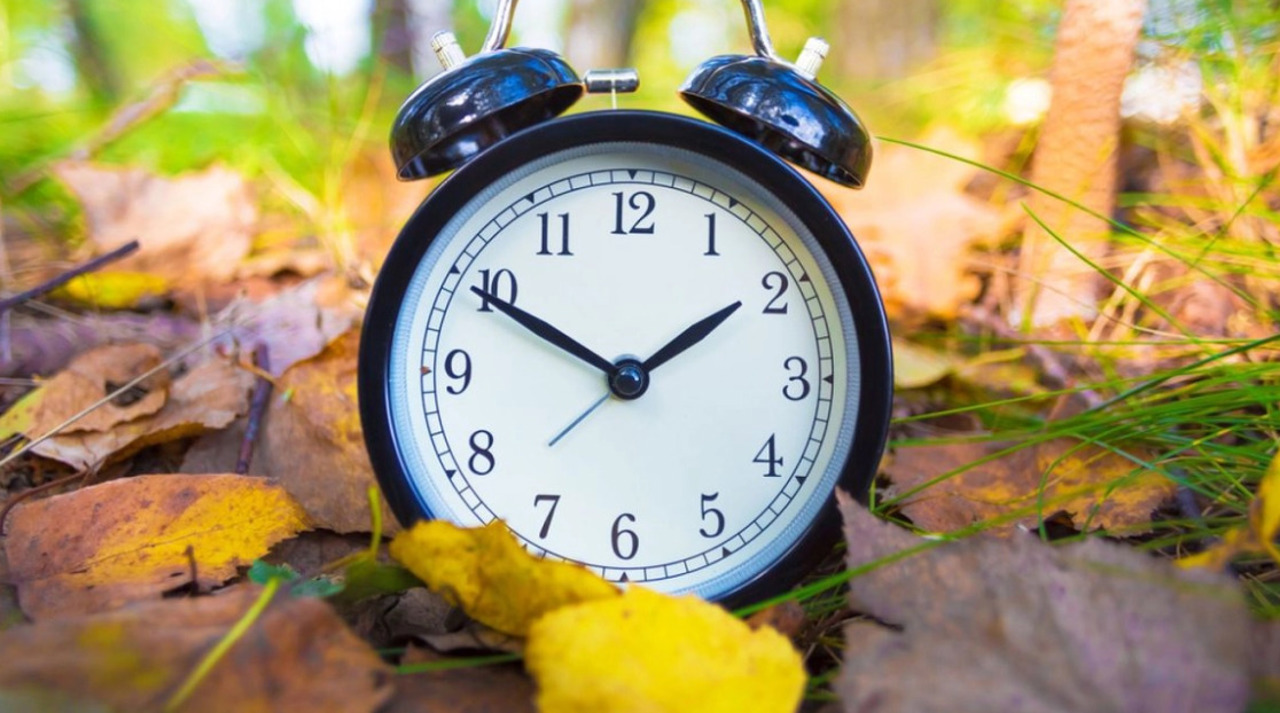
The Republic of Moldova will switch to winter time overnight from Saturday to Sunday, October 24–25, when clocks will be turned back by one hour. At 4:00 a.m., clocks will be set back to 3:00 a.m., giving people an extra hour of sleep. The change follows the calendar used in European Union member states, in accordance with a government decision approved on February 25, 2026.
Digital devices connected to the internet, such as mobile phones, tablets, computers, and smartwatches, will generally update the time automatically. However, mechanical clocks, wall clocks, wristwatches, and alarm clocks not connected to the internet must be adjusted manually.
According to the established schedule, the Republic of Moldova switches to daylight saving time on the last Sunday in March, when 3:00 a.m. becomes 4:00 a.m., and returns to standard time, commonly known as winter time, on the last Sunday in October, when 4:00 a.m. becomes 3:00 a.m.
Why the European Union has not abandoned daylight saving time
Although the European Union has discussed ending seasonal clock changes for several years, member states have yet to agree. All 27 European Union countries still switch to daylight saving time in spring and return to standard time in autumn.
Discussions on ending the practice intensified in 2018, when the European Commission held a public consultation involving approximately 4.6 million people. Around 84% of respondents supported abolishing seasonal clock changes.
In March 2019, the European Parliament backed a proposal to end the practice, initially scheduled to take effect in 2021. However, the reform stalled in the Council of the European Union because member states failed to reach a common position.
One of the main challenges is deciding which time to keep permanently: daylight saving time or standard time. Without coordination, neighbouring states could end up using different time zones, complicating international transport, logistics, and cross-border economic activity.
European institutions returned to the issue in 2025. During a debate in Strasbourg, European Commissioner for Transport Apostolos Tzitzikostas announced that the European Commission was conducting an additional assessment. He argued it was time to end seasonal clock changes, though he did not set a specific deadline for a decision.
In 2025, the Polish presidency of the Council of the European Union also proposed a two-year trial period in which all member states would permanently maintain daylight saving time. A working group examined the initiative, but country representatives requested further analysis before deciding.
A European study could clarify the effects of abolishing seasonal clock changes
In February 2026, the European Commission commissioned a study to examine the consequences of abandoning the practice of changing clocks twice a year.
The research examines two scenarios: all member states permanently maintain daylight saving time, or they keep standard time. It also assesses situations in which countries make different choices, potentially creating new time differences at the EU’s internal borders or between member states and countries outside the bloc.
The analysis examines the economic, social, and environmental effects of a potential reform, focusing on the functioning of the single market, energy savings, transport, and public health.
During the first phase, conducted between February and April 2026, authorities in member states were consulted and ten scenarios were defined for analysis. The next phase involves collecting additional data, including from organizations operating in the sectors concerned.
According to a document presented to the Council of the European Union in June, the study is expected to be completed by the end of 2026. Its findings could inform future discussions on abolishing seasonal clock changes.
Until a potential reform is adopted, however, the current rules remain in force. Therefore, the switch to winter time on the night of October 24–25, 2026, will follow the established schedule.
How the time change affects the body
Switching to winter time can temporarily disrupt the circadian rhythm, the biological mechanism that regulates the sleep-wake cycle in response to the alternation between light and darkness.
Possible effects include fatigue, difficulty falling asleep, irritability, and reduced concentration. These symptoms are generally temporary, as the body needs a few days to adjust to the new schedule.
To ease the transition, specialists recommend keeping a regular sleep schedule, staying active, and getting natural daylight during the day. Staying hydrated and eating balanced meals can also support overall well-being.
Limit energy drinks, especially in the evening, to avoid difficulty falling asleep.
Although returning to standard time gives an extra hour of sleep on the night of the change, the effects on the body may vary from person to person, depending on sleep patterns and how well you adapt.
A practice introduced during World War I
Germany and Austria-Hungary first introduced seasonal clock changes in 1916, during World War I. Many other countries later adopted the practice, including during the 1970s, when the oil crisis and concerns about energy conservation led to wider implementation.
Today, the rules vary considerably by region. Iceland, Türkiye, Russia, Belarus, Armenia, and Georgia are among the countries that have abandoned seasonal clock changes. In many countries across Asia and South America, clocks remain unchanged year-round.
In Australia, only certain states and territories observe daylight saving time, while others maintain standard time year-round.
The practice remains controversial internationally. Supporters of seasonal clock changes cite the benefits of organizing activities around natural daylight, while critics point to disrupted sleep and difficulties adjusting.
Arguments in favour of abolishing the system include simplifying everyday life, avoiding synchronization problems in transport and computer systems, and reducing difficulties for cross-border economic activities. At the same time, energy-saving benefits are now considered less convincing than when the practice was introduced.