Ukraine defense pact bolsters Moldova against rising drone threats
Moldova is turning to Ukraine's battlefield expertise to close critical air-defense gaps after 19 drone incursions breached its airspace in November, defense officials and analysts said on November 23.
The latest incident, recorded on November 21, involved a jet-powered drone that crossed Moldovan airspace twice. Speaking on Radio Moldova's "Public Space" broadcast, Marin Butuc, a representative of the General Staff's Strategic Communication Directorate, said the repeated violations are straining national security institutions and exposing the limits of existing defenses.
While Moldova can detect unmanned aerial vehicles, Butuc noted that the country lacks sufficient resources to neutralize them.
“Airspace security is ensured in layers, by altitude, and detection often depends directly on the composition of the aircraft flying illegally,” said Butuc. “Ukraine is a pioneer in technological progress for low-altitude detection—battlefield achievements that are valuable for vulnerable states as well.”
Controversy over suspension clauses
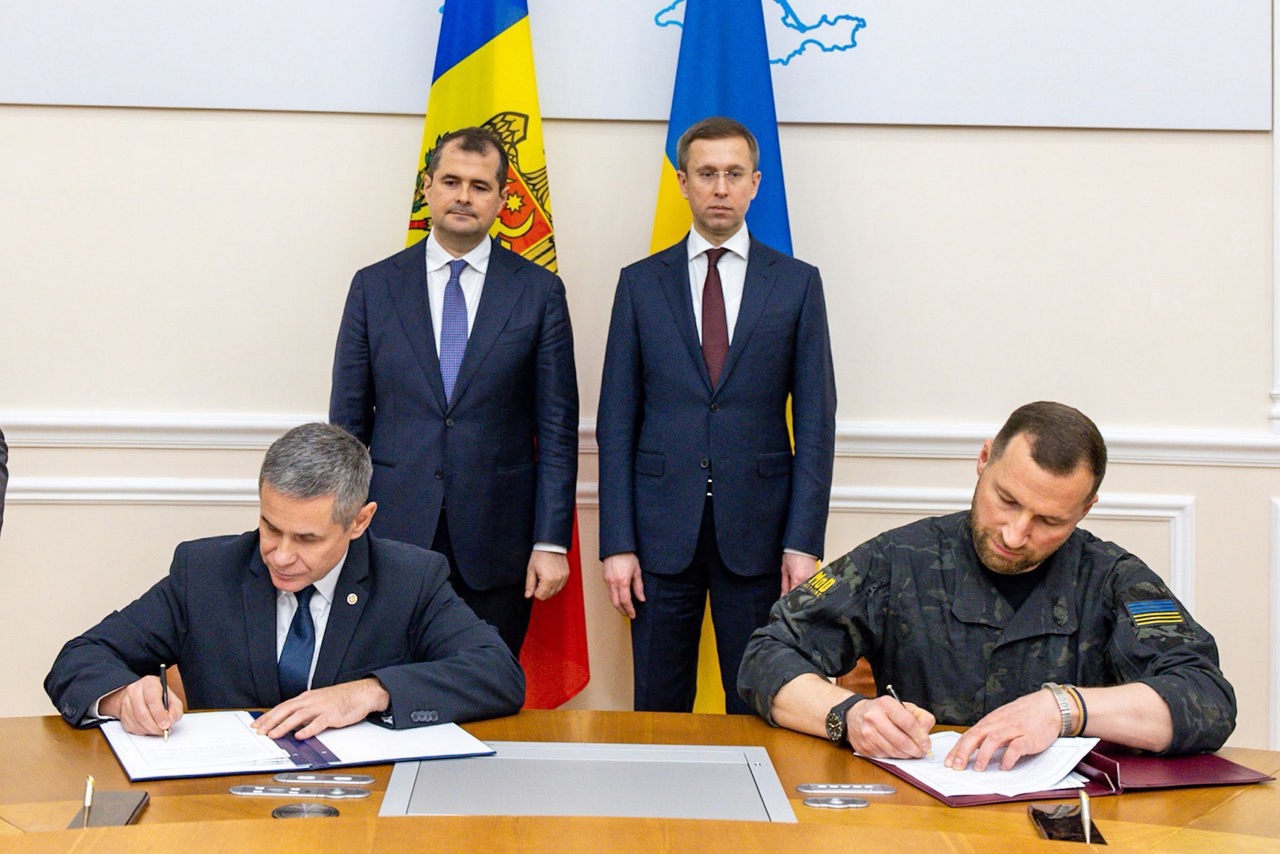
Signed in Kyiv on October 26 by Moldovan Defense Minister Anatolie Nosatîi and Ukrainian Defense Minister Yevhenii Khmara, the military-technical cooperation agreement was ratified by Moldova's parliament on November 19 with 56 votes. The five-year pact renews automatically and enables expertise sharing, personnel training, technology transfer, and joint defense capability development.
Either side may terminate the deal via written diplomatic notification, taking effect after six months, or initiate suspension if security, sovereignty, or neutrality risks emerge. However, opposition lawmakers criticized the suspension mechanism during parliamentary debates last week.
Speaking during the same broadcast, Socialist MP Marcel Cenușă said Moldova's Security and Intelligence Service (SIS) had recommended a clause permitting immediate termination, rather than consultations, if major threats arose. He also cited a lack of transparency during negotiations and the broad scope of the pact.
“SIS stated very clearly that this agreement should be open to termination within 72 hours if major shortcomings and risks to state security arise,” said Cenușă. “Defense Ministry officials—who drafted the project alongside Ukraine's Cabinet of Ministers—instead opted to hold consultations within 72 hours before agreeing on a suspension. Like it or not, we are signing a military-technical agreement with a country at war.”
Neutrality and battlefield know-how
Legal and security experts rejected claims that the accord undermines Moldova's constitutional neutrality or risks drawing the country into conflict.
Responding during the same broadcast, former Constitutional Court President Alexandru Tănase said constitutional neutrality does not absolve the state of its duty to protect citizens and territory.
“We currently face a series of concrete challenges that we must address,” said Tănase. “Signing this agreement does not violate our neutrality status from any perspective and creates no risk of Moldova being drawn into war.”
Security analyst Artur Leșcu added that adopting Ukraine's operational experience is a practical step toward building an effective air-defense network.
“Ukraine holds genuine know-how in certain military fields, and it is an entirely logical step to learn how they operationalize this system—how they capture data, route it to individual units to identify incoming threats, and direct mobile teams to shoot down drones,” said Leșcu.
Translation by Iurie Tataru
RELATED COVERAGE
- Moldova ratifies Ukraine defense pact amid neutrality debate
- A drone twice violated Moldovan airspace
- Unauthorized drone crosses Moldovan airspace for nine minutes
- Moldova's military deal with Ukraine sparks heated parliamentary row
- In 2026, Moldova's airspace was violated 67 times, with nearly a third in October