Putin’s shadow war budget: Moscow prepares for 2026 confrontation with NATO
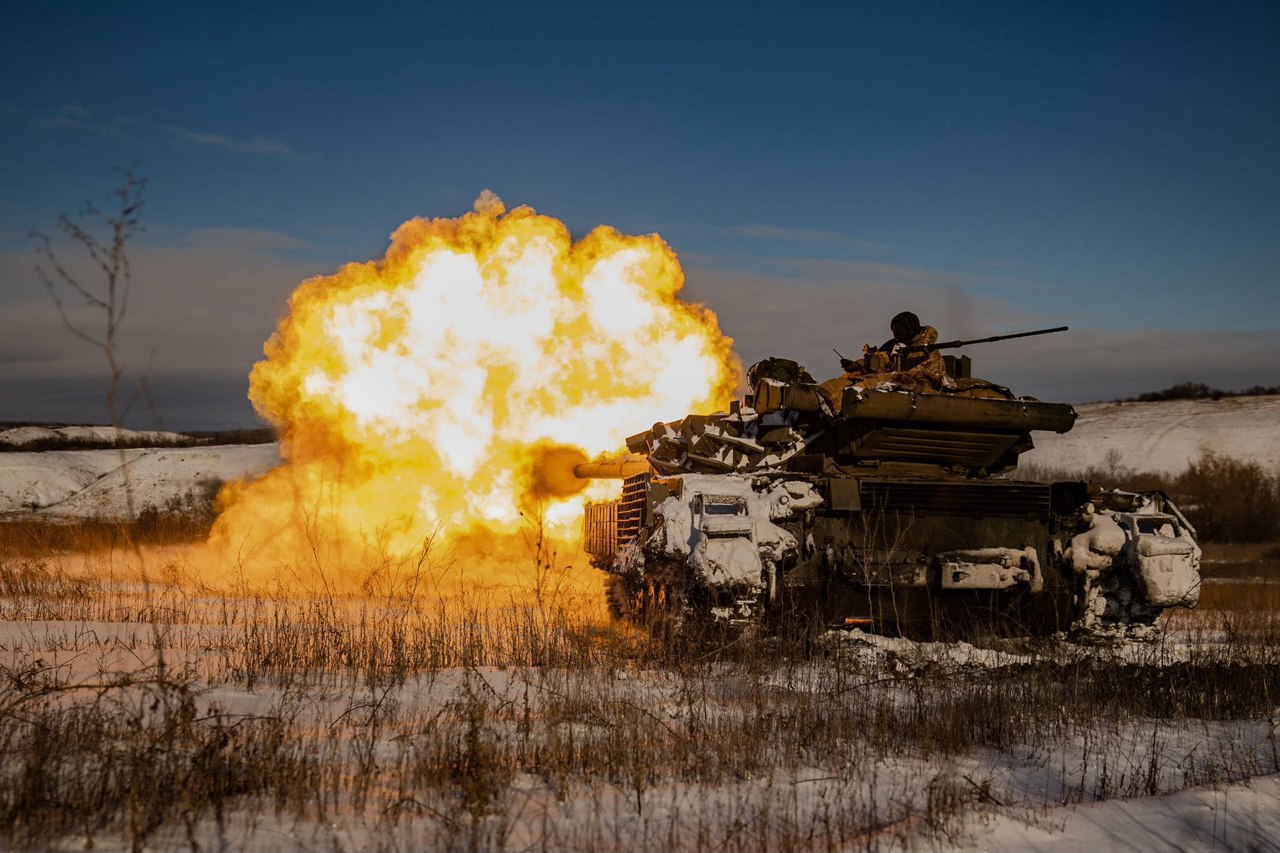
Moscow’s military expenditure far outpaces official Kremlin figures, with strategic ambitions extending well beyond the Ukrainian theater. According to a recent German intelligence analysis, Russia is masking massive military spending.
Estimates for 2025 reach approximately €250 billion, a sum intended to fuel both the war in Ukraine and a potential escalation against NATO’s eastern flank.
The shadow budget mechanism
The report by German security services reveals that Vladimir Putin is concealing military costs that may account for half of the national budget. This represents roughly 10% of Russia's GDP, a figure 66% higher than official disclosures.
Analysts note that these funds are hidden under civilian labels. Defense construction, military IT projects, and social payments for personnel are intentionally reclassified to bypass international and domestic scrutiny.
The high cost of attrition
"War is an extremely expensive activity, destructive to any economy," stated Ukrainian military expert Aleksandr Kovalenko during the Scaner program on Moldova1. He notes that Russia is entering its fifth year of conflict in 2026, which will have a "catastrophic impact" on its already fragile economic structure.
Kovalenko highlights that Russia relies heavily on clandestine supply chains. For shell production, Moscow depends on Chinese machinery and raw materials like cotton cellulose for gunpowder, often acquired at prices far above market rates through smuggling.
Industrial deception and the "Oreşnik" myth
The expert describes much of Russia’s "super-secret" weaponry as a tool for embezzling funds. A prime example is the "Oreşnik" missile system. Kovalenko argues it is not a breakthrough but a derivative of the older RS-26 "Rubej" developed over a decade ago.
The armored vehicle industry serves as a "gold mine" for corruption. Russia can only manufacture the T-90 tank from scratch. Other models are simply refurbished Soviet-era T-72s. These are pulled from storage, painted, and fitted with basic upgrades at a cost of $400,000, but billed to the state as "new" tanks for $4 million.
Targets beyond Ukraine: The 2026 horizon
German intelligence chief Martin Jäger recently warned that Europe must prepare for escalation. He identified three primary goals for Putin: undermining NATO, destabilizing European democracies, and dividing Western societies.
Expert analysis suggests that Russia is preparing for a direct or hybrid confrontation with NATO as early as the second half of 2026. While Finland is being monitored, Estonia—specifically the city of Narva—is considered a more likely target due to its symbolic and strategic value.
Economic breaking point
While the Russian economy has not yet collapsed, the burden has shifted entirely to the population. High interest rates and massive corporate borrowing for war efforts are straining the banking system.
Despite warnings of a looming crisis from international observers, experts conclude that, for the immediate future, Putin maintains sufficient liquid reserves to sustain his military objectives.
Translation by Iurie Tataru