President Sandu honors victims of 1946-1947 famine, citing political repression as primary cause
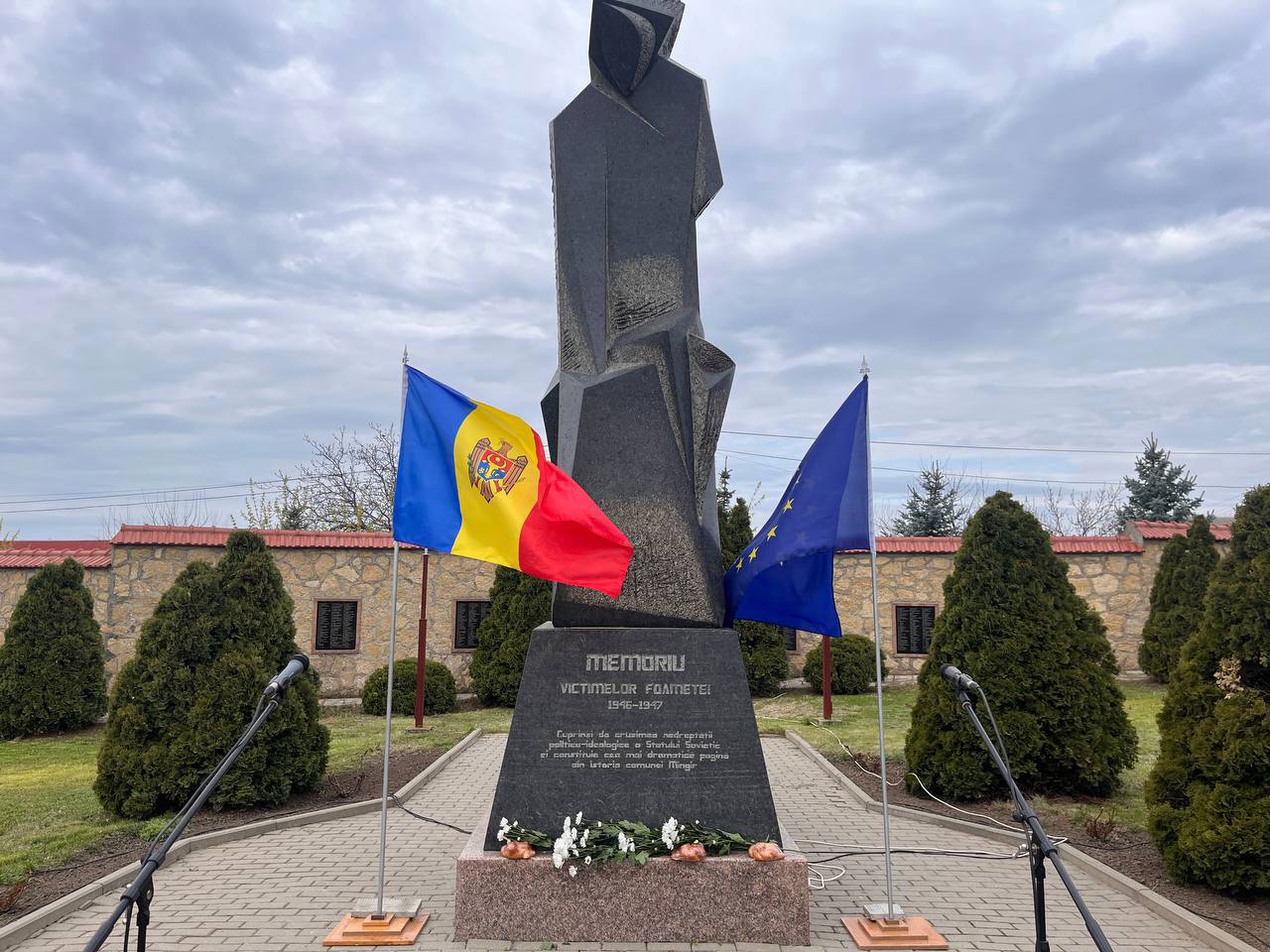
Moldova observed a national day of mourning on April 16 to commemorate the 80th anniversary of the 1946–1947 famine. Local communities across the country held religious services and floral tributes to honor the hundreds of thousands of lives lost during the catastrophe.
President Maia Sandu attended a major commemorative event in the village of Mingir, Hâncești District. The ceremony included the consecration of a memorial monument dedicated to the victims in a village that lost nearly half of its population to starvation.
The 1946–1947 famine remains one of the darkest chapters in Moldova’s history. Experts and officials emphasize that the disaster was not merely a natural calamity but a tragedy exacerbated by the authoritarian policies of the Soviet regime.
The toll of a man-made disaster
During her address, President Sandu highlighted the staggering scale of the loss. Estimates suggest that approximately 200,000 people died, a figure that continues to haunt the national consciousness and represents a profound generational trauma.
"The famine touched every social category and every community," President Sandu stated. She noted that Moldova was the most severely affected region of the former Soviet Union, with a mortality rate ten times higher than in Russia.
In Mingir alone, records indicate that roughly 1,400 people perished within months. This accounted for nearly 50% of the village's inhabitants at the time, leaving behind fractured families and a hollowed-out community.
Policy over providence
National Archival Agency data confirms that over 123,000 people died in just a few months, representing 5% of the total population. While a severe drought impacted Eastern Europe in 1946, climatic data shows the tragedy was preventable.
Rainfall levels in 1946 were comparable to previous dry spells that did not result in mass starvation. The critical difference was the Soviet administration's insistence on impossible grain procurement quotas despite the compromised harvests.
The regime initially demanded 165,000 tons of grain from a total harvest of only 365,000 tons. These forced collections stripped rural households of their last food reserves, transforming a regional drought into a state-engineered humanitarian catastrophe.
Translation by Iurie Tataru