Moldova faces heightened risks after law expands Kremlin military authority
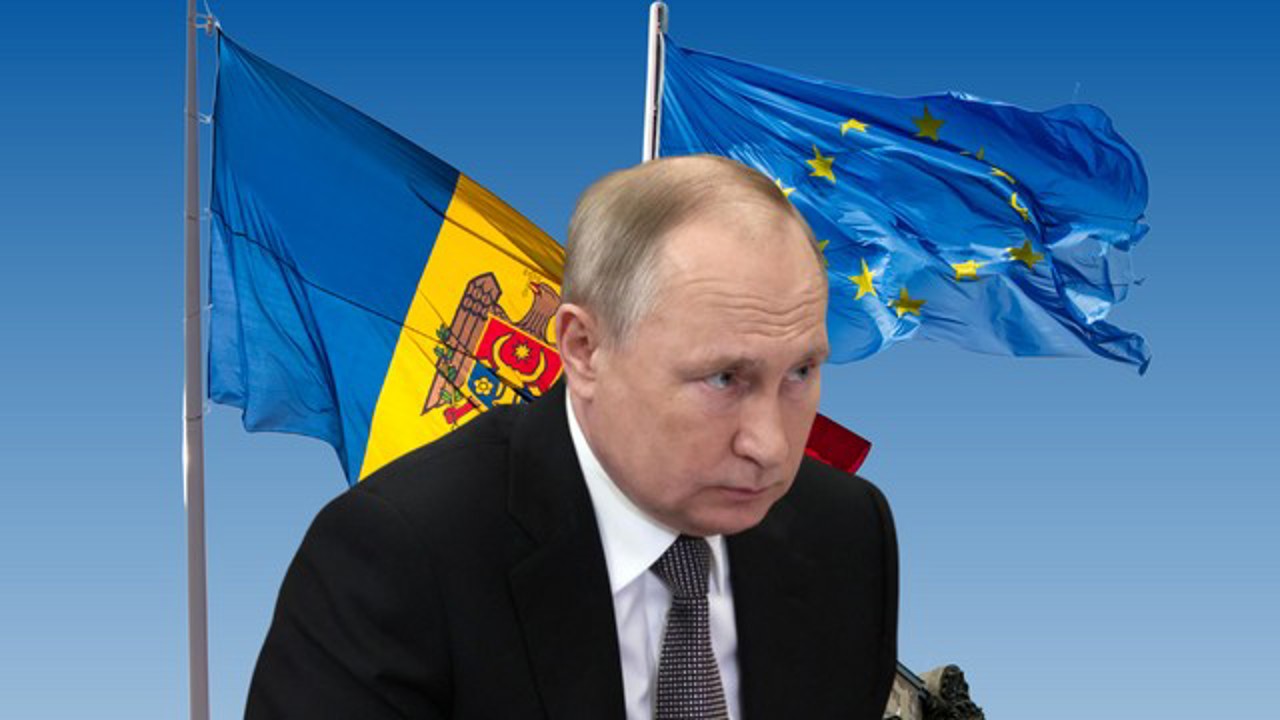
The State Duma of the Russian Federation has adopted a draft law that permits President Vladimir Putin to order military interventions in other countries to "protect Russian citizens." Political analysts from Chisinau view this as a new indication of geopolitical pressure on former Soviet republics, including the Republic of Moldova.
In this context, the authorities in Chișinău must accelerate their efforts towards European integration and enhance the country's defense capabilities to reduce security vulnerabilities, as experts recommend.
Nicolae Negru: Treating threats with "maximum seriousness"
Political analyst Nicolae Negru believes that the Kremlin's latest legislative initiative is an attempt to justify its actions in Ukraine while simultaneously serving as a warning to neighboring states.
"This is not the first time there has been talk of defending Russians in other countries, nor is it the first time threatening statements have been directed at neighboring states. Similar statements have been made against the Republic of Moldova," Negru noted, referencing recent comments from Russian Foreign Minister Sergei Lavrov and Secretary of the Russian Security Council Sergei Shoigu.
According to Negru, Moscow is trying to establish a legislative framework that would legitimize possible aggressive actions abroad.
"Essentially, this is an intention to restore the empire, and such restoration must be justified with a legislative foundation. This is what Russia is currently working on. The adoption of this law signals this direction," he commented in an interview with Teleradio-Moldova.
He emphasized that the Moldovan authorities must treat security threats very seriously and move closer to the European framework.
"What the authorities of the Republic of Moldova must do is strengthen the country's defense and security. We cannot accomplish this solely with our own forces," declared the analyst.
Negru added that the European integration of the Republic of Moldova should also be viewed through the lens of regional security.
"We are working to integrate into the European Union to become part of the European economic, cultural, and social landscape, as well as its defense and security dimension," he said.
Ion Tăbârță: "It will be complicated to resist on our own"
Political analyst Ion Tăbârță believes that the decision made by the Russian legislature serves more of a psychological and propagandistic purpose, aimed at bolstering Vladimir Putin's image.
"This new power granted to Putin is unusual. In the Russian Federation, a dictatorship exists, and the State Duma readily approves what Putin proposes. It is more likely a psychological tool," Tăbârță stated.
He warns that the risks do not only affect the Republic of Moldova, which is "one of the potential targets of these threats from the Russian Federation," but they also encompass all post-Soviet states with ethnic Russian communities, including the Baltic countries.
According to Tăbârță, while Chișinău has made some progress in enhancing security, it is insufficient given the current situation.
"Our authorities are making efforts, and we acknowledge that in recent years, we have been trying to strengthen our state institutions to counter Russian interference," he said.
However, he believes that the Republic of Moldova requires external support and strategic partnerships to effectively deal with potential pressures.
"It will be difficult to resist potential Russian threats on our own. Therefore, we need allies," the analyst concluded.
Alexandru Tănase: "Let's accelerate the integration processes into the EU and NATO"
Alexandru Tănase, the former President of the Constitutional Court, emphasizes that Moscow's recent decision is not surprising and should be understood within the context of the challenges facing the Russian Federation on both military and economic fronts.
"Russia is currently in a very difficult situation from military, political, humanitarian, and economic perspectives. It is trying to convey messages that are perceived as displays of strength," Tănase noted.
He also warns that the Republic of Moldova remains vulnerable due to the lack of a collective defense system.
"We are in a risk zone, particularly because we are a small country with an almost non-existent army and we are not part of any security system," Tănase pointed out.
Given the current regional context, he believes there is a pressing need to accelerate the processes of Western integration.
"We must draw the necessary conclusions in order to speed up our European integration processes, entry into the North Atlantic Alliance, and participation in any collective security system that could protect us from the military power of the Eastern empire," said Tănase, the former President of the Constitutional Court.
It should be noted that on May 13, the State Duma of the Russian Federation approved a draft law that would allow Vladimir Putin to order military interventions outside the country to protect Russian citizens abroad.
According to the document, Russia could deploy troops if its citizens are "arrested, investigated, tried, or abused" by foreign states or international institutions.
The Speaker of the State Duma, Veaceslav Volodin, justified the project by stating the need to protect Russian citizens from what he termed "Western justice."
Vladimir Putin has 14 days to approve the law.