New books for 1,300 Moldovan kindergartens in the "100 Stories Read" program
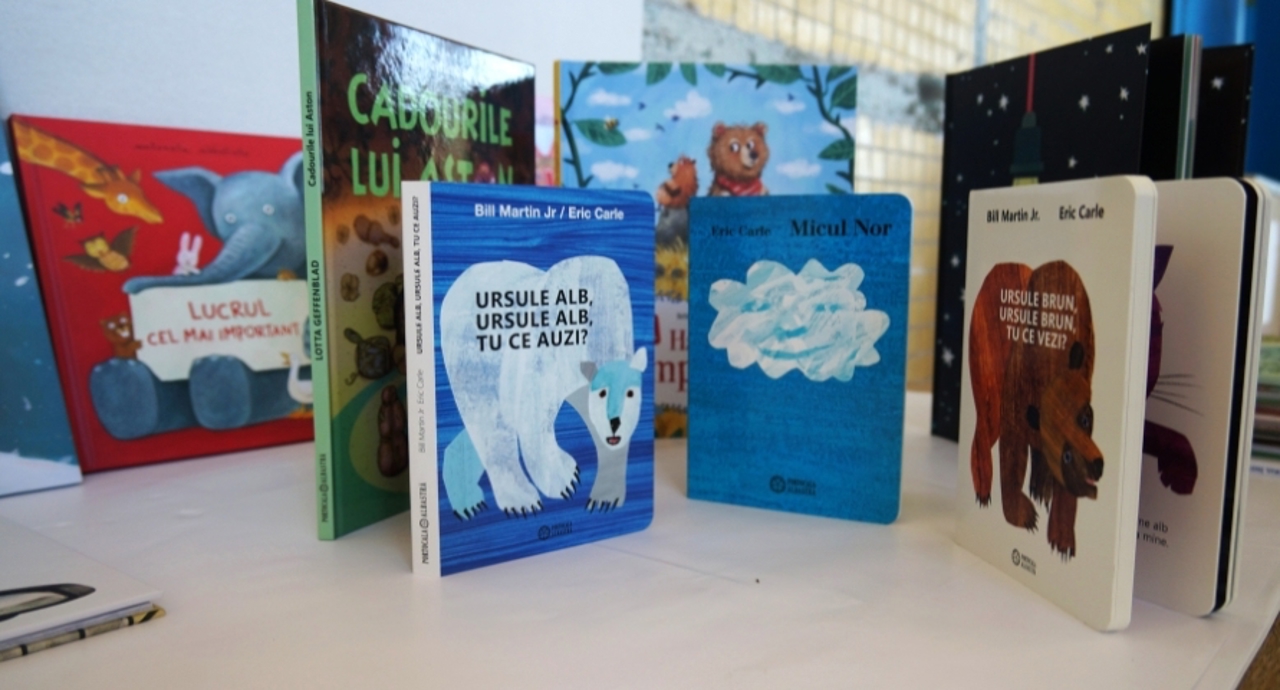
The national program "100 Stories Read" is being expanded across the country. During this phase, 1,300 kindergartens will receive a set of 21 children's books along with a display shelf to help create reading spaces. In total, 27,300 books and 1,300 shelves will be distributed.
Representatives from the beneficiary institutions report that reading has become a more integral part of daily activities, resulting in noticeable improvements in children's vocabulary, communication skills, and emotional expression.
At Kindergarten No. 4 "Licurici" in Fălești, books are utilized daily, even before bedtime. The director, Snejana Miliac, shares that the children eagerly anticipate reading activities and demonstrate an increasing interest in stories.
"We even read together before bedtime, turning the pages with great care until the children fall asleep. We use our diverse collection of books every day," Snejana Miliac told Teleradio-Moldova.
Some children at the institution have begun reading stories to their classmates, and reading serves as a foundation for discussions among the children. The director observes a positive change in their behavior.
"During this period, children are often more focused on playing games or using screens, but through storytelling, they engage in conversations with each other," she added.
Miliac also emphasizes that reading helps children pay closer attention to stories and enhances their understanding of what they hear and see in books. In her view, images play a crucial role, especially for younger children, as they help them follow the storyline more easily.
At the “Izvoraş” Kindergarten in Anenii Noi, books are actively incorporated into free playtime. Director Liliana Reveneală explains that children can visit the library independently, select books, and explore them together while discussing characters, animals, and events within the stories.
"Even during their free time, the children go to the library, choose a book, and start reading. Although not everyone reads in the traditional sense, they look through the books, discuss them among themselves or with the educator, and identify the animals and actions described," Liliana Reveneală shared.
The kindergarten has also engaged parents and the community in reading activities. At the “Book Picnic,” held outdoors, children read alongside their parents. Community members—including parents, local shop employees, local public administration representatives, and church officials—are also invited to the kindergarten to read to the children.
"These activities help us enhance children's vocabulary, imagination, thinking skills, and their ability to communicate, which is increasingly important today. Most importantly, these books foster moments of closeness and dialogue," added Liliana Reveneală.
She noted that the impact of these activities on children's development is evident, improving everything from vocabulary and creativity to emotional expression and social interaction.
"I want to emphasize that vocabulary and imagination indeed develop. The children become more confident and open; they think more clearly and express their emotions and thoughts better. They also become more empathetic, as many stories address themes of empathy, friendship, courage, and creativity," she continued.
For educators, books serve as valuable tools that can be integrated into various activities. A single story can facilitate discussions about animals, friendship, emotions, or other topics in the educational curriculum.
The national program "100 Stories Read" aims to prepare children for reading and writing by promoting vocabulary development, encouraging the expression of ideas, enhancing story comprehension, and familiarizing them with letters and sounds.
The program benefits 100 early education institutions that serve children from national minority backgrounds. This new initiative marks their first opportunity to establish a collection of Romanian books specifically for emergent literacy activities.
To ensure these new resources are utilized effectively, the Ministry of Education and Research is also investing in educator training. A first group of 250 teachers is participating in the third edition of the Emergent Literacy Seminar, organized by the OvidiuRO Association in Iași, a partner in the program.
In September and October 2026, the Ministry will organize a national cascading training program, where educators from all early education institutions will learn practical methods and tools for integrating interactive reading into their daily activities.
The "100 Stories Read" program is implemented by the Ministry of Education and Research in partnership with the OvidiuRO Association, which supports reading activities and teacher training.
The goal of the authorities is to make reading a natural part of children's daily experiences. The new books will be used not only for storytelling but also for developing language, cognitive, and social skills.